
The MentalSpace School Journal
Research-grounded articles for school administrators, counselors, and educators — HB 268 compliance, universal screening, threat assessment, and what good school mental health looks like day-to-day.
Filtered: Family & Parent Support
28 articles
 Family & Parent Support
Why does my teenager not want to eat?
Why does my teenager not want to eat? Usually it's stress or illness. Learn the signs of anxiety, depression or an eating disorder and what parents can do next.
 Family & Parent Support
How common is school avoidance?
How common is school avoidance? Research puts anxiety-based school refusal at 1 to 5 percent of children. Learn the signs, when it peaks, and what helps.
 Family & Parent Support
What is the "3 3 3 rule" for children with anxiety?
The 3-3-3 rule for children with anxiety: name 3 things you see, 3 sounds you hear, move 3 body parts. How to teach it, its limits, and when to get help.
 Family & Parent Support
How to punish a child with conduct disorder?
How to punish a child with conduct disorder: why harsh punishment backfires, which brief consequences help, and how home and school can share one plan.
 Family & Parent Support
At what age can a child remember trauma?
At what age can a child remember trauma? Lasting memories start around 3 to 4, but earlier trauma can leave a mark. Signs, what helps, and what schools do.
 Family & Parent Support
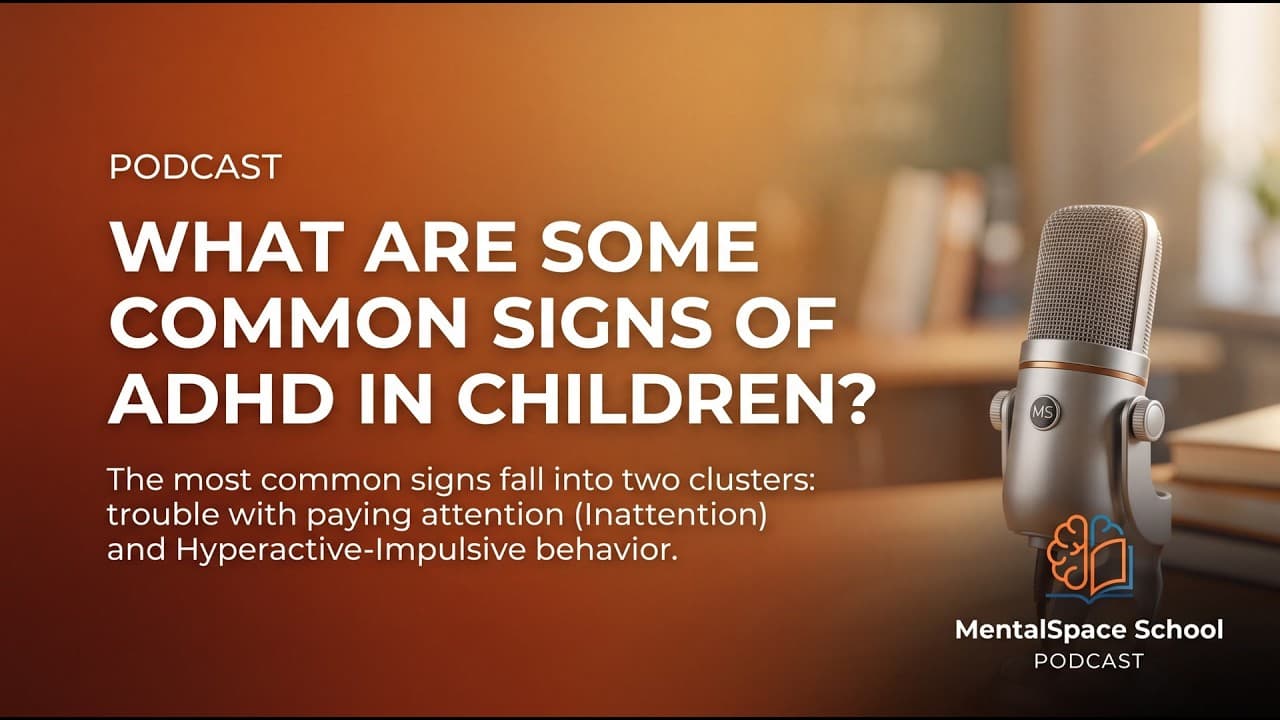
What are some common signs of ADHD in children?
Common signs of ADHD in children include inattention, hyperactivity, and impulsivity. Learn what clinicians look for, look-alikes, and what schools can do.
 Family & Parent Support
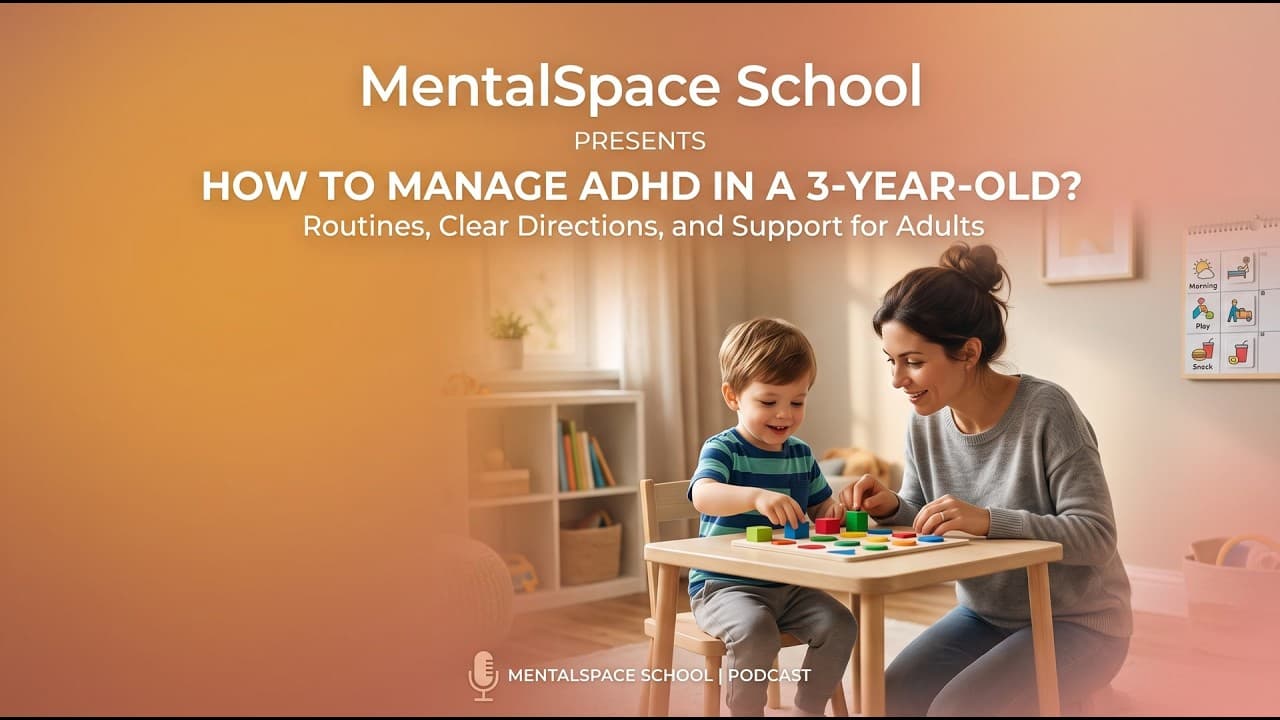
How to manage ADHD in a 3 year old?
How to manage ADHD in a 3 year old: at this age you manage behavior, not a diagnosis. Six daily habits, when to call the pediatrician, and how schools help.
 Family & Parent Support
How to help a teen with severe depression?
How to help a teen with severe depression: what to do in the first week, what to say, how treatment works, and what a Georgia school can put in place.
 Family & Parent Support
Student Caregivers: Signs Teachers Miss and How Schools Help
Student caregivers often hide behind tardies and tired eyes. Learn the signs teachers miss, why discipline backfires, and how Georgia schools can help.
 Family & Parent Support
School Mental Health Referral: How to Talk to Parents
School mental health referral calls succeed or fail in the first thirty seconds. Five moves that turn a caregiver conversation into a first appointment.
 Family & Parent Support
Culturally Competent Care in Georgia Schools
"Family declined services" often means the fit was wrong, not the family. How culturally competent school mental health care in Georgia earns the second appointment.
 Family & Parent Support
Parent Consent: Getting Families to Say Yes
Parent consent for school counseling is where most referrals stall. Learn the four questions families ask, and the conversation design that raises conversion.
 Family & Parent Support
School Therapy Cost: Medicaid, Insurance & $0 Copay
School therapy cost, answered plainly: $0 with Medicaid, verified rates with private insurance, and why travel and missed work are the real barrier for families
 Family & Parent Support
Back-to-School Screen Time Reset That Actually Sticks
A back-to-school screen time reset that works: start with sleep, swap instead of subtract, set a measurable goal, and expect a rough first week.
 Family & Parent Support
Morning Meltdowns: The Signal Schools Miss
Morning meltdowns before school signal anxiety, sleep debt, or early school avoidance. Learn why August is the cheapest month to act and how to build a referral trigger.
 Family & Parent Support
Childhood Anxiety in Divorce: A School Guide
Childhood anxiety in divorce often hides as stomachaches, school avoidance, and slipping grades. How schools recognize it, respond, and coordinate care.
 Family & Parent Support
Encopresis: Why Soiling Is Medical, Not Misbehavior
Encopresis (childhood soiling) is medical, not misbehavior. Learn why chronic constipation usually drives it, why punishment backfires, and how coordinated care helps.
 Family & Parent Support
Social Anxiety in Kids: When Shyness Becomes a Disorder
Social anxiety disorder in children is not ordinary shyness. Learn the signs, cultural factors, and evidence-based treatments that help students thrive in school.
 Family & Parent Support
Selective Mutism: Why It's Anxiety, Not Shyness
Selective mutism is an anxiety disorder, not shyness or defiance. Learn the signs, why early treatment works, and how Georgia families and schools can respond.
 Family & Parent Support
Teen Eating Disorders: The Warning Signs Parents Always Miss
Teen eating disorders affect 13% of adolescents by age 20 and have the highest mortality of any mental health condition. Learn warning signs, evidence-based treatments, and what Georgia schools can do.
 Family & Parent Support
The Unstoppable Strength of School Moms: Why Their Mental Health Matters
School moms advocate, attend, organize, and show up — often while exhausted. Their mental health is foundational to student wellness. Here's how schools can support it.
 Family & Parent Support
Thank You to Every Mom: Single Moms, Working Moms, and Grandmothers Raising Kids
Single moms, working moms, grandmothers, stepmoms, aunties, foster moms — every caregiver raising a Georgia kid deserves recognition and real mental health support.
 Family & Parent Support
Behind Every Thriving Student: The Strength of Mothers in School Wellness
Behind every thriving student is a mother whose strength makes it possible. We explore the parental role in student mental health and how schools can support both.
 Family & Parent Support
The 9 PM Parent Worry: Why Your Gut Is Data, Not Anxiety
Parent intuition about kid mental health is data, not anxiety. Why parents notice changes 2-4 weeks before teachers and how to act on what you already know.
 Family & Parent Support
The One Cyberbullying Question to Ask Your Kid Tonight
The one cyberbullying question to ask your kid tonight, plus the family-to-district handoff Georgia schools use to coordinate care without forcing disclosure.
 Family & Parent Support
Principal Keeps Calling? It Might Not Be a Behavior Problem
Child behavior issues at school often have a clinical cause — anxiety, ADHD, or trauma — not a discipline one. Here is what to look for and what helps.
 Family & Parent Support
How to Talk to Teenage Boys About Mental Health
Talking to teenage boys about mental health works best side-by-side, not face-to-face. Use the car, micro openers, and the second silence — not the kitchen-table summit.
 Family & Parent Support
Why 75% of Boys Won't Tell Parents They're Struggling — And What Schools Can Do
Three out of four boys won't tell a parent when they're struggling emotionally. The reasons are predictable — and so are the openings that get them to talk. A K-12 guide.
Listen to the MentalSpace School podcast
Three new episodes a day for K-12 administrators, counselors, and educators — HB 268 updates, threat assessment, and the day-to-day of school mental health. Subscribe wherever you listen.
 22 min
Why does my teenager not want to eat? — Full Episode | K-12 School Mental Health
Nov 20, 2026
 19 min
How common is school avoidance? — Full Episode | K-12 School Mental Health
Nov 4, 2026
 20 min
What is the "3 3 3 rule" for children with anxiety? — Full Episode | K-12 School Mental Health
Oct 29, 2026
 20 min
How to punish a child with conduct disorder? — Full Episode | K-12 School Mental Health
Oct 23, 2026
 19 min
At what age can a child remember trauma? — Full Episode | K-12 School Mental Health
Oct 22, 2026
 20 min
What are some common signs of ADHD in children? — Full Episode | K-12 School Mental Health
Oct 17, 2026
 21 min
How to manage ADHD in a 3 year old? — Full Episode | K-12 School Mental Health
Oct 10, 2026
 22 min
How to help a teen with severe depression? — Full Episode | K-12 School Mental Health
Oct 8, 2026
Watch the conversations on YouTube
Long-form video editions for district leaders and counseling teams, with closed captions and full transcripts.
 5 min
Why does my teenager not want to eat? | K-12 School Mental Health
Nov 20, 2026
 4 min
How common is school avoidance? | K-12 School Mental Health
Nov 4, 2026
 4 min
What is the "3 3 3 rule" for children with anxiety? | K-12 School Mental Health
Oct 29, 2026
 7 min
How to punish a child with conduct disorder? | K-12 School Mental Health
Oct 23, 2026
 5 min
At what age can a child remember trauma? | K-12 School Mental Health
Oct 22, 2026
 4 min
What are some common signs of ADHD in children? | K-12 School Mental Health
Oct 17, 2026
 5 min
How to manage ADHD in a 3 year old? | K-12 School Mental Health
Oct 10, 2026
 5 min
How to help a teen with severe depression? | K-12 School Mental Health
Oct 8, 2026
New articles daily.
Subscribe to receive the latest articles, podcast episodes, and policy updates for K-12 mental health — straight to your inbox. No spam.
We respect your privacy. Unsubscribe at any time.