
About this video
To the teachers, paraprofessionals, counselors, and school nurses who pour themselves into students with significant behavioral challenges — including those with Oppositional Defiant Disorder — we see you. ODD is a clinical diagnosis, not a character flaw, and it requires evidence-based intervention
Generated from MentalSpace School: Georgia K-12 Mental Health and Compliance Guide
#MentalSpaceSchool #SchoolMentalHealth #K12Wellness
Transcript
Oppositional defiant disorder drives the highest rates of educator burnout among all behavioral challenges present in K12 classrooms. Clinical diagnosis requires a persistent pattern of behavior lasting at least 6 months. Temporary outbursts resulting from external stress do not meet this threshold. Clinicians identify OD through three specific pathological markers. A persistent irritable or angry mood, argumentative defiance, and vindictiveness. These markers are often misinterpreted by administration as a lack of discipline or poor parenting, though they represent a clinical condition rather than a character flaw. Recognizing this pathology requires a formal diagnosis from a licensed clinician. Traditional school disciplinary models fail here because they apply temporary behavioral consequences to a persistent clinical pathology. We can model the classroom as
a two node ecosystem where the student and the educator are inherently linked. Introducing the OD variable into the student node forces the entire system to compensate for persistent defiance. The constant effort required to manage this behavior rapidly degrades the overall regulatory capacity of the classroom environment. Systemic stress cascades directly from the disregulated student to the professional managing them. This emotional weight is absorbed daily by teachers, paraprofessionals, school counselors, and nurses. Unilateral interventions treat the student in isolation, leaving the educator exposed to a feedback loop of instability. The mental space school framework provides an operational blueprint for a dualtrack response to this instability. The first architectural layer targets the student node through evidence-based clinical care. Parent
child interaction therapy or PCIT is the foundational intervention for students exhibiting severe defiance. This is supplemented by parent management training and family therapy, creating a structural bridge between home and the classroom. Individual CBT for the child provides the final clinical pillar for long-term behavioral stabilization. Neutralizing OD requires these precise clinical protocols. Generalized school counseling lacks the specificity to resolve these systemic issues. Historically, families are prevented from accessing these protocols by logistical and financial friction points. A sameday taotherapy model removes geographic and temporal barriers, providing immediate clinical entry for the student. Reaching vulnerable populations requires a 0 cost footprint for families on Medicaid. Integrating broad commercial coverage, including BCBS, Etna, Humana, and Peach State, ensures districtwide
viability across all socioeconomic levels. Assigning dedicated therapist teams to specific schools provides consistency that randomized telealth pools cannot match. Clinical evidence is effective only when paired with infrastructure that guarantees zero friction access for the family. Returning to the educator node reveals a failing status bar for warm firm limits, a direct result of constant occupational stress. Managing OD requires strict continuous emotional regulation. Yet that capacity is continually depleted by the students dysregulation. Maintaining a psychological posture of warm firm limit setting is impossible when an educator is in a state of burnout. The mental space model addresses this through a second architectural track, confidential staff teleaotherapy. Injecting professional wellness support directly into the educator's schedule stabilizes the
node and restores their regulatory capacity. Attempting to treat the student while ignoring the educator's needs guarantees eventual ecosystem collapse. Viewing the system at a district level requires a infrastructure to protect both nodes. Deploying dedicated teams necessitates stringent data security protocols. The system must maintain strict adherence to HIPPA and FURPO regulations and meet Georgia's upcoming HB268 compliance deadline by July 2026. Reliability for crisis intervention depends on a technical platform with 99.5% uptime. This legal and technical framework is the only way a progressive clinical vision can survive in a K12 environment. The aggregate data achieved by mental space demonstrates the model's impact. We trace the 92% anxiety reduction to successful PCIT and CBT protocols for students. The
89% attendance improvement is a direct outcome of stabilizing the classroom with supported regulated educators. These outcomes are the mathematical derivation of stabilizing both sides of the classroom dynamic at the same time. Traditional K12 responses fail because they rely on punitive reactions to profound clinical disorders. Effective intervention requires a synchronized dualtrack taotherapy model that supports both the student and the staff member. Mental Space School provides the operational blueprint for this systemic change. Details on implementation are available at mental spacechool.com. Managing classroom disruption effectively relies on architecting systemic support that accounts for clinical realities.
More videos
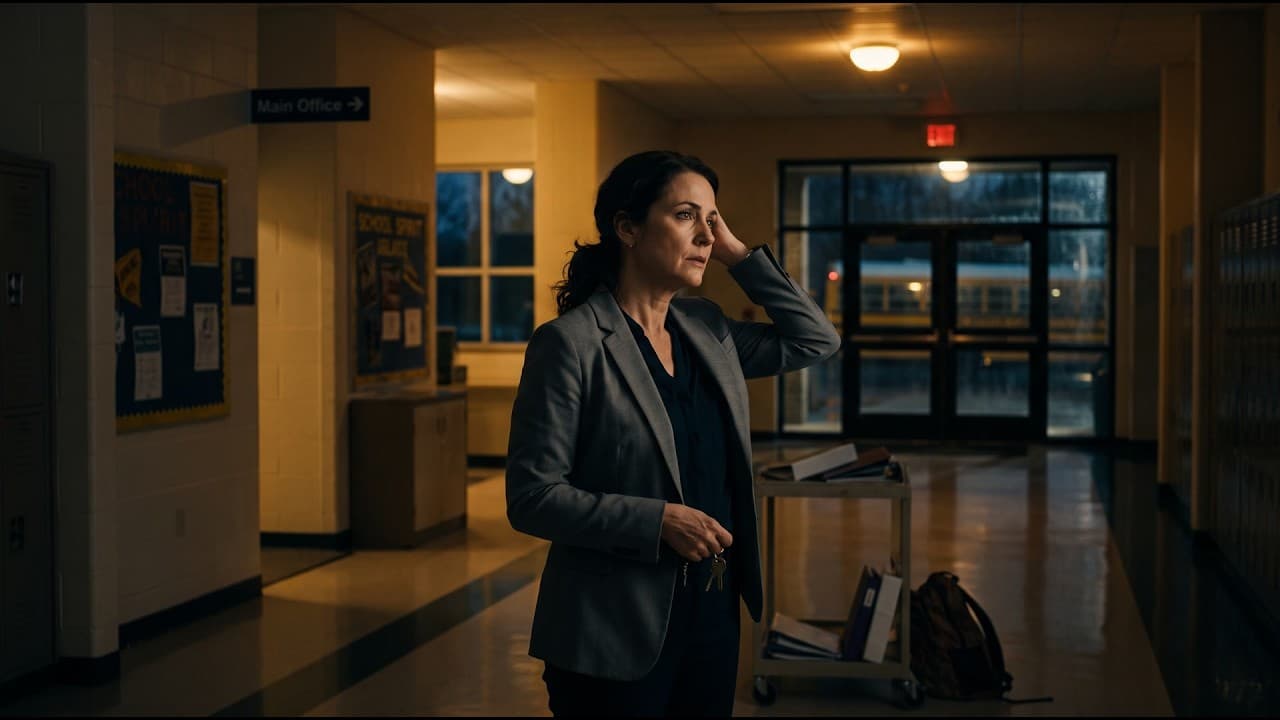
Administrator Burnout in K-12 Schools
To the principals and assistant principals still in the building tonight:

Cyberbullying in Schools: What Works
A question we get from assistant principals more than any other: what do we do when it happened online, at night, off campus?

Fall Break Re-Entry Dips in Schools
Fall break re-entry has a rhythm to it, and most buildings feel it on day three rather than day one.
Bring this kind of support to your school
Teletherapy, onsite clinicians, live workshops, and HB-268 compliance support for K-12 districts. Book a 15-minute consultation.
Get started