
About this video
A question worth sitting with: when a student in your school asks for help, how long do they wait to receive it?
In most schools we partner with, the honest answer before partnership is 4-8 weeks. After partnership, it's the same day.
The difference isn't magic — it's structure. We assign a dedica
Transcript
All right, let's jump right into this explainer and tackle what is quite frankly one of the heaviest and most urgent burdens facing Georgia school administrators today. Now, if you're working in education, you already know the deal. The conversation around student mental health, it's not just about raising awareness anymore. It is fundamentally about access. So, today we're going to look really closely at a systemic operating model from Mental Space School. This is a system designed from the ground up to provide K through 12 mental health support specifically across Georgia. We'll be breaking down exactly how they are entirely restructuring the timeline of care and ultimately changing the narrative for students, educators, and families. So, I want
you to just sit with this stark question for a moment and really confront the reality of your current mental health infrastructure. When a student in your building finally summons the courage to ask for help, how long do they actually have to wait to receive it? It is such a critical, delicate moment. That ask is incredibly fragile. And that gap, the time between a student raising their hand and a professional actually answering the call, is easily the most vulnerable window in education. The contrast we're looking at here is genuinely jarring. For most schools out there that don't have a dedicated partnership in place, the honest answer to that question is a wait of 4 to 8
weeks. I mean, think about that. 4 to 8 weeks for a child who is currently in distress. But with Mental Space School, that wait time drops to the exact same day. Same day teletherapy access. Now, the difference here isn't magic, right? It's purely structural. It is all about how the system itself is engineered to respond to that student. Okay, so before we can really appreciate the solution, we have to kind of unpack why traditional referral pipelines are actively failing our students. We need to evaluate the broken mechanics of the standard model that most schools are basically forced to rely on right now. If you have ever tried building a referral pipeline from scratch, you already
know these agonizing failures all too well. First off, generic provider directories are essentially just dead ends. Handing a struggling family a printed list of phone numbers is kind of like handing them a phone book from 1998 and just wishing them the best of luck. Second, those 4 to 8 week waitlists completely destroy any momentum and trust. By the time that appointment finally rolls around, the crisis has often deepened. And lastly, the whole out-of-network status, that becomes an impossible financial barrier for families who simply cannot afford out-of-pocket care. These are the systemic roadblocks that leave our kids completely stranded. Fixing this mess requires a completely new structural operating model. Mental Space School isn't just a slightly
better directory. It is a dedicated, diverse, and culturally competent therapist team assigned specifically to your school. And it is absolutely vital to note that this level of intention ensures the care actually resonates with the students receiving it. They aren't just a referral list you hand out. They become a living, breathing extension of your own support team. Unlike a static directory that just sits in a drawer, this dedicated team integrates deeply into your actual environment. They genuinely take the time to get to know your school counselors by name. They do the work to understand the specific culture, the community vibe, and the unique student population of your specific building. And they embed seamlessly right into your
existing workflows, so your educators don't have to learn some complicated new software. That right there removes a massive administrative burden from your staff, and it paves the way for that seamless same-day teletherapy access we talked about a minute ago. What's really brilliant is how proactive this model is. It goes way beyond standard individual therapy to offer comprehensive wrap-around support. We're talking crisis intervention, along with crucial suicide and violence prevention, which we all know are absolute must-haves for school safety right now. But definitely notice the inclusion of staff wellness programs and family counseling. Seriously, every teacher who has access to support before they hit the point of burnout is a teacher who is still going to
be in the classroom next year. The entire ecosystem of the school gets supported. All right, moving past the structural philosophy for a second, let's dive into the hard logistical data, the compliance stuff, and the actual outcomes that prove this model is immediately viable for schools across Georgia today. Suddenly, all those impossible barriers we talked about, they just vanish. For public insurance, Medicaid students face a literal $0 copay. That is a massive win for accessibility. And for commercial insurance, they're in-network with a huge roster: Blue Cross Blue Shield, Cigna, Aetna, United Healthcare, Humana, Peach State, CareSource, Amerigroup. It's extensive. On the compliance side of things, the whole program is fully HIPAA and FERPA compliant, protecting student
privacy without question. Plus, it provides immediate support for compliance with Georgia state law HB 268 well ahead of that July 2026 deadline. So, the logistical friction is just completely removed. So, what do those smooth logistics actually achieve in the real world? Well, the success metrics are honestly staggering. We're seeing a 92% reduction in anxiety. And because of that, kids are actually staying in class, which drives an 89% improvement in attendance. Wrap that whole process together, and you get an 85% family satisfaction rate. That is exactly what happens when you eliminate the waiting period and provide immediate, culturally competent care. And to back up those phenomenal outcomes, Mental Space maintains an incredible 99.5% system uptime. They
have 24/7 support for their infrastructure, meaning when a counselor initiates that same-day teletherapy connection, the system actually works. It guarantees extreme reliability. And let's be real, that is exactly what you need when a student's well-being is on the line. There is absolutely zero room for technical failure during a moment of crisis. It really all boils down to this simple, powerful truth. Every student we connect with early is a student we don't meet on their worst day. And you know, that applies to everyone in the building. Every family who reaches out in a moment of calm is a family who isn't forced to navigate total chaos alone. Reaching them early on the very same day they
ask for help, it changes the entire trajectory of their school year and potentially their entire life. So, I'll leave you with this provocative thought. What could your specific school community achieve if no student ever had to wait for their worst day to get the help they deserve? The Mental Space School model is available across Georgia right now at mentalspaceschool.com. Just take a moment to think about how shifting from an 8-week waitlist to same-day access could fundamentally transform the entire culture of care in your building.
More videos

How to manage ADHD in a 3 year old?
How to manage ADHD in a 3 year old?
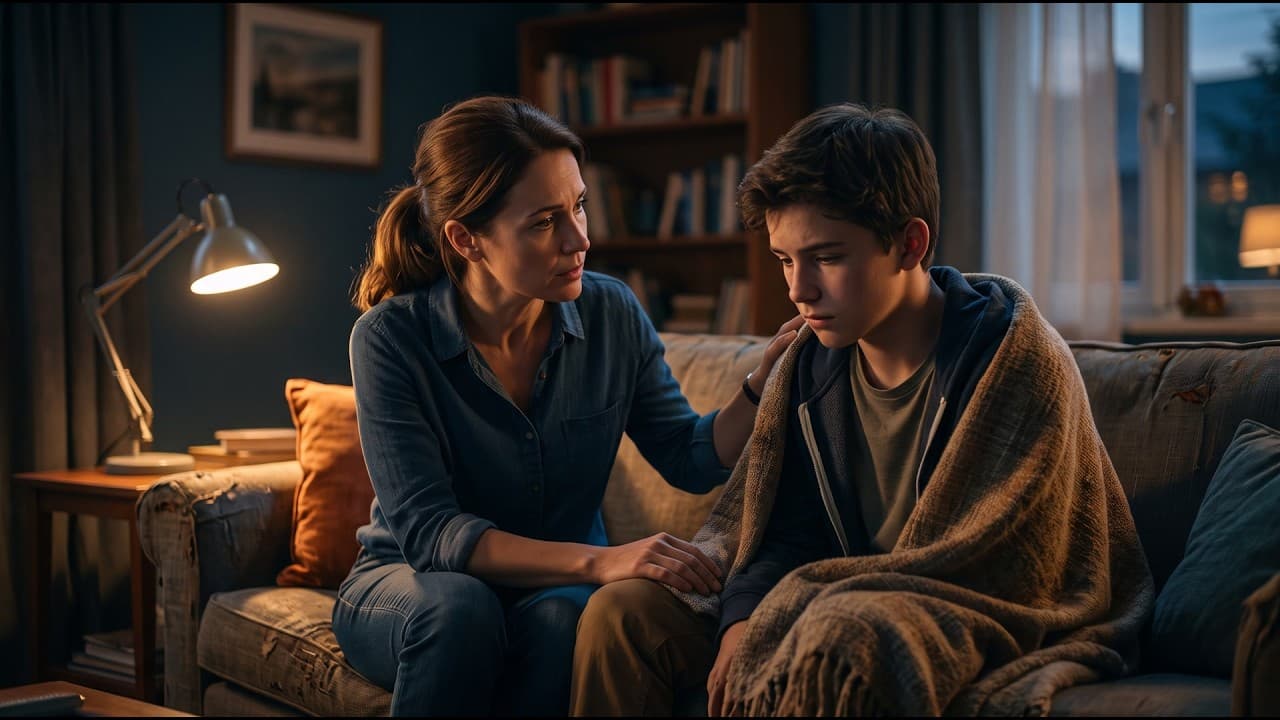
How to help a teen with severe depression?
How to help a teen with severe depression?
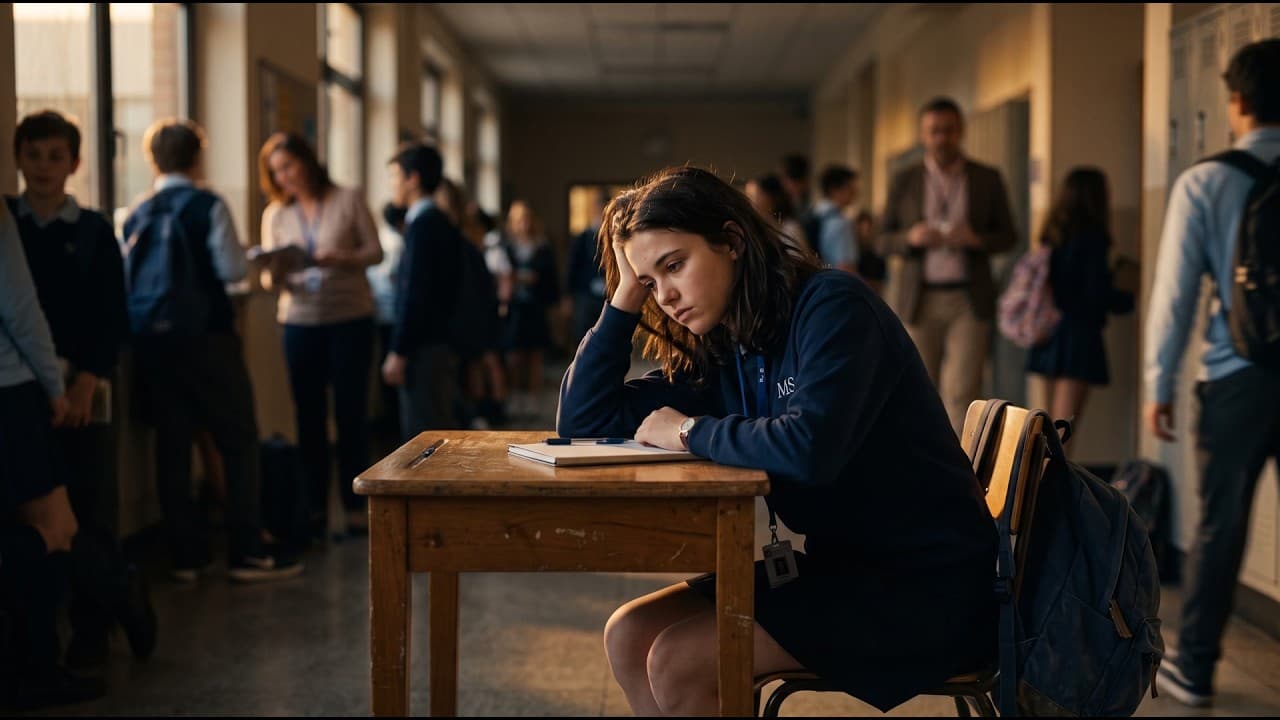
Students Raising Siblings: Signs Teachers Miss
Educators and parents: some of the most responsible kids in your building are also the most tired.
Bring this kind of support to your school
Teletherapy, onsite clinicians, live workshops, and HB-268 compliance support for K-12 districts. Book a 15-minute consultation.
Get started