
About this video
Educators and parents: some of the most responsible kids in your building are also the most tired.
Students who help raise younger siblings often don't think of themselves as caregivers. To them, it's just what the family needs. But the load adds up: early mornings, missed after-school activities,
Generated from MentalSpace School: Georgia K-12 Mental Health and Compliance Guide
Transcript
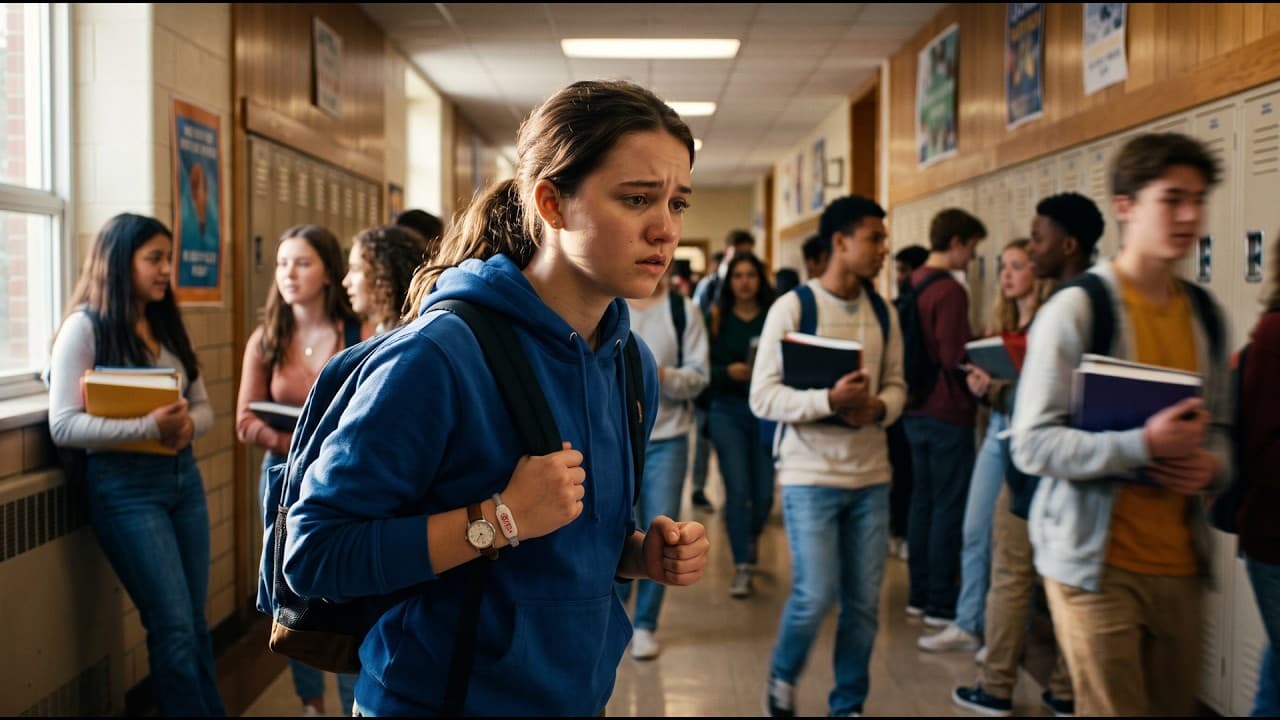
Every educator knows a student who seems remarkably mature, yet consistently struggles to keep their eyes open during first period. The warning signs follow a familiar pattern. Frequent morning tardies, falling asleep at their desk, and a sudden disappearance from sports, clubs, or after school tutoring sessions. Because schools operate on strict schedules, the default response to these behaviors is often punitive. The student gets assigned detention, loses campus privileges, or is assumed to be unmotivated. This creates an immediate disconnect between the students reality and the school's expectations. When a student is penalized for behaviors they cannot control, the resulting anxiety makes them feel increasingly isolated from their teachers and peers. Relying on standard disciplinary protocols in these cases
creates a cycle of friction. Every detention for a late arrival adds another layer of stress to an already maxed out student, eventually making the classroom feel like a source of conflict. Treating these kids purely as disciplinary cases destroys the exact foundation of trust required to find out what is actually going wrong in their lives. When we look past the tardy slips, a common reality emerges. Many of these struggling students are quietly working as secondary caregivers for their younger siblings. You usually won't hear them ask for help because they don't see themselves as caregivers. To them, managing the household is simply what their family needs to survive. This cognitive load diagram shows how abstract worries about
family logistics heavily outweigh focus on school, creating a constant hum of background anxiety. By the morning bell, that invisible mental burden drains their energy, leaving them at zero reserve capacity before they open a textbook. This level of deep exhaustion leaves a student with no emotional or intellectual energy left for a grade. They aren't ignoring their assignments. They are simply running on a battery that was depleted long before they walked through the school doors. Once we understand this dynamic, the classroom symptoms make sense. That frequent morning tardiness often aligns exactly with the logistical hurdle of dropping a younger brother or sister off at a different school. The fatigue that causes them to nod off during lectures
is the direct result of starting high school homework late at night only after the little ones are finally asleep. A sudden withdrawal from sports or the robotics club is the necessity of rushing straight home to babysit so a parent can make their evening shift. And those unexplained sporadic absences frequently happen because a younger sibling got sick, the parents had to work, and the older child had to stay home to manage the crisis. Looked at through this lens, these behaviors prove the student is highly organized, incredibly patient, and fiercely protective of their family. Seeing these patterns for what they are changes the students status in the building. They stop being a problem to be managed and
start being an incredibly capable child who is simply carrying a load designed for an adult. The first step to building that support costs nothing. Ask the student about their home situation privately and do it strictly without judgment. From there, explicitly name the strengths you see. Tell them you recognize their deep patience and impressive organizational skills. Validation from an adult breaks the isolation they feel. Educators can also build structural flexibility directly into the students week. Offering a quiet catch-up period during advisory or subtly adjusting a homework deadline provides immediate relief. Finally, designate one reliable adult in the building to check in with them regularly, creating a consistent anchor in an otherwise chaotic schedule. These adjustments turn
down the volume on the students daily stress. School stops being another set of impossible demands and becomes a place where they have the flexibility and the permission to catch their breath. But there is a limit to what a teacher can do. Chronic environmental stress from managing a household is not the same thing as a diagnosible mental health condition. When a student's burden leads to severe anxiety, irritability, or total withdrawal, educators cannot solve the issue through classroom flexibility alone. That requires a licensed clinician. This is where Mental Space School operates as a systemic safety net for Georgia schools. They provide dedicated therapist teams who deliver same-day teleotherapy to students directly during the school day. Tracking these
clinical interventions, which include family counseling, reveals an 89% improvement in attendance, a 92% reduction in anxiety, and 85% family satisfaction. Mental space also eliminates barriers. Treatment is $0 for Medicaid, in network with most Georgia plans, and supports the HB268 compliance deadline. By combining empathetic teacher flexibility with mental spaces clinical support, schools can finally give overburdened students the space to just be kids again.
More videos

How to manage ADHD in a 3 year old?
How to manage ADHD in a 3 year old?

How to help a teen with severe depression?
How to help a teen with severe depression?
Chronic Illness & Student Anxiety: Signs and Support
A student with epilepsy can be fully prepared to manage a seizure and still spend every class worrying about having one in front of classmates.
Bring this kind of support to your school
Teletherapy, onsite clinicians, live workshops, and HB-268 compliance support for K-12 districts. Book a 15-minute consultation.
Get started