
About this video
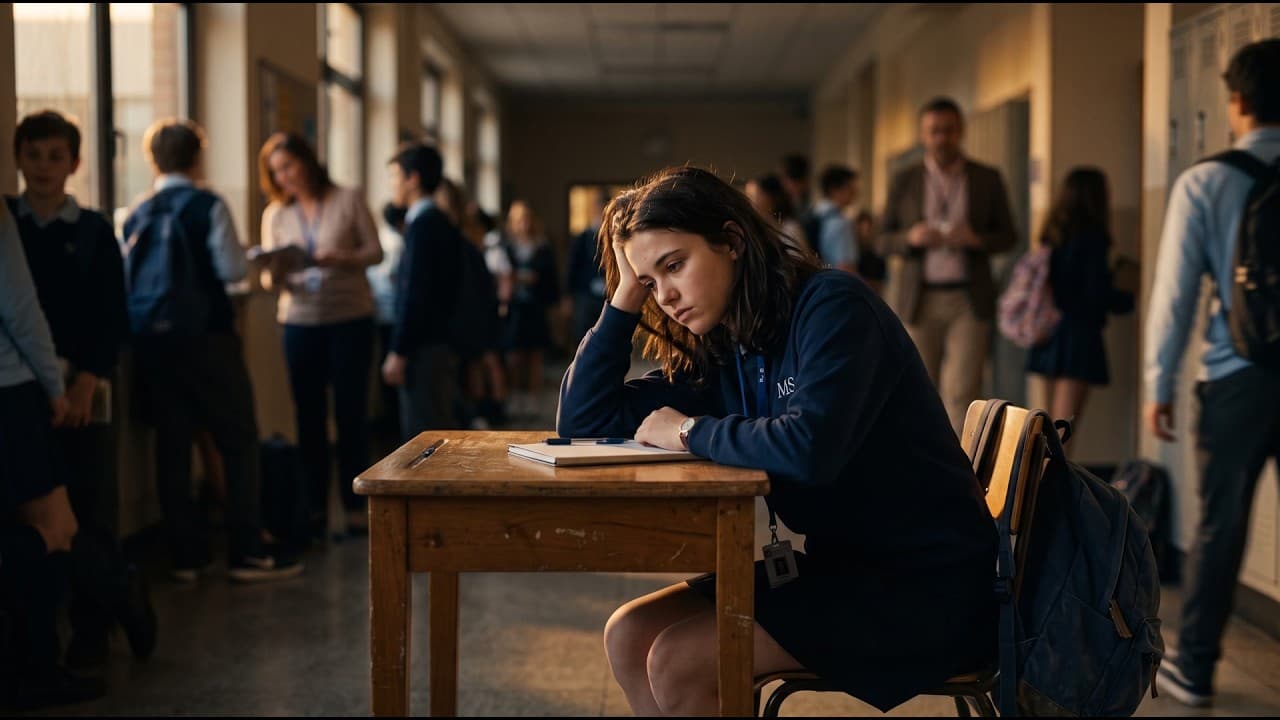
5 signs of anxiety in K-12 students that adults often miss:
1. Stomach aches before school 2. Sudden drops in grades 3. Avoidance of favorite activities 4. Unusual irritability 5. Withdrawal from friends
Anxiety doesn't always look like fear — sometimes it looks like anger, boredom, or shutting do
Transcript
If you ask a teacher or a parent to describe an anxious student, they usually point to the child who is visibly distressed. The one nervously pacing the halls, crying before a test, or fidgeting at their desk. This classic image represents a small fraction of how anxiety actually manifests in a K12 environment. Most adults are socially trained to look for obvious fear. This narrow focus leaves a massive group of students, including the high achievers, the very quiet kids, and those who appear unusually mature, to navigate a silent internal struggle entirely unnoticed. Left unressed, these childhood stress responses solidify into permanent neurological patterns. By the time these students reach adulthood, those patterns correlate with high rates of
clinical depression and chronic substance use disorders. We miss these calls for help because our mental model of what childhood anxiety looks like is outdated. When a child lacks the vocabulary to express internal fear, the brain encodes that stress into physical symptoms and performance declines. This presents as the first hidden sign, recurrent somatic complaints. These are the students who report severe stomach aches, nausea or tension headaches specifically during the morning routine. The body generates a genuine physiological alarm. You can see the source of the pain by how it often vanishes on the weekends only to return the moment the school stressor reappears on Monday morning. This internal pressure eventually attacks the mind leading to the second
sign, a sudden unexplained drop in grades from a previously consistent high-erforming student. This chart shows cognitive bandwidth. Anxiety operates like a massive background application. silently draining total processing power. As it consumes more energy, the brain cuts power to other areas. Executive function, concentration, and working memory are the first to go dark. Early stage anxiety often masquerades as a mysterious physical illness or a sudden loss of academic ability. Anxiety also forces changes in a student's social habits. Starting with the third sign, a sudden avoidance of favorite activities like sports or art clubs. Avoidance is a primary psychological defense mechanism. While adults often interpret this as a loss of interest or laziness, the student is actually attempting
to reduce their total environmental stress. The fourth sign is unusual irritability. It looks like snapping at peers, a low frustration tolerance or conflict with teachers. Anger is a far more socially acceptable emotion for an adolescent to display than paralyzing fear. It functions as a protective mask. Finally, the fifth sign is social withdrawal. This is the student who begins eating lunch alone and consistently declining invitations to spend time with their core friend group. This sudden isolation acts as a desperate response to social overwhelm separate from a student's natural level of introversion. These behavioral shifts, often dismissed as just a phase, are actually calculated survival mechanisms deployed by an overwhelmed nervous system. Simply recognizing these signs isn't
enough. Without a way to bridge the gap between a teacher noticing a symptom and a clinician providing care, the students trajectory remains unchanged. Evidence shows that moving the timeline of treatment up, catching the anxiety while it is still hiding behind these masks, leads to significantly better long-term outcomes. This required a system that places professional care directly inside the environment where these symptoms appear. Mental Space School provides this bridge for Georgia K12 districts by assigning dedicated therapist teams to partner schools. The system facilitates sameday taotherapy. A student moves from detection to treatment within a single school day. The model handles HIPPA, FURPA, and Georgia's HB268 compliance, integrating directly with major commercial insurance providers and Medicaid networks.
This integration removes the financial barrier for families on Medicaid, ensuring immediate care comes at a 0 cost. The results are measurable. Across partner schools, data shows an 89% improvement in attendance and a 92% reduction in student anxiety levels. We can change the long-term trajectory for students by looking past the masks of childhood anxiety and ensuring the infrastructure for help is ready the moment they are noticed.
More videos

How to manage ADHD in a 3 year old?
How to manage ADHD in a 3 year old?

How to help a teen with severe depression?
How to help a teen with severe depression?
Students Raising Siblings: Signs Teachers Miss
Educators and parents: some of the most responsible kids in your building are also the most tired.
Bring this kind of support to your school
Teletherapy, onsite clinicians, live workshops, and HB-268 compliance support for K-12 districts. Book a 15-minute consultation.
Get started