
About this video
We talk a lot about crisis response. Let's talk about crisis prevention.
The strongest safety net is the one a student never falls into. That means catching warning signs early. Connecting students with a therapist before things escalate. Supporting teachers before burnout becomes resignation. Equi
Generated from MentalSpace School: Georgia K-12 Mental Health and Compliance Guide
Transcript
Welcome to the explainer. Today we're tackling a really massive shift in how we handle mental health in Georgia's K12 schools. You know, we spend a ton of energy talking about crisis response, but to truly safeguard our classrooms, we've got to completely reframe our operational mindset to crisis prevention. Throughout this explainer, we're going to look at why proactive crisis prevention isn't just some nice idea. It's actually operationally superior to the reactive models we've all grown so used to. We'll break down the actual logistics of making the shift and why it's absolutely key to truly protecting our students. Let's get into it. Okay, let's dive into this. There's this incredibly powerful idea that completely redefineses our safety
strategies. The strongest safety net is the one a student never falls into. Think about that for a second. True prevention works precisely because it isn't dramatic, right? It's not sirens. It's not emergency board meetings. It means catching those subtle warning signs early on. It means stepping in to support our incredible teachers before their very real burnout turns into resignation. And it means equipping our families with the tools they need before bedtime turns into an absolute battle every single night. That quiet, steady support. That is what real prevention is all about. But to get there, we have to address the elephant in the room. Section one, the crisis response myth. So the comforting myth we love
to tell ourselves in the education space is that escalations just drop out of a clear blue sky. We throw our hands up and say, "Well, no one could have known." But let's be honest here, that simply isn't true. Crisis response is inherently reactive, right? It literally forces us to sit around and wait for the siren for a major escalation to happen. Crisis prevention, on the other hand, is proactive. It acknowledges the hard truth that crises almost always leave a trail of breadcrumbs. They have warning signs that are clearly visible for weeks, sometimes even months before the actual event ever takes place. Let's move to and see how this builds. Section two, spotting the warning signs.
So, what do these warning signs actually look like on a random Tuesday morning in a crowded school hallway? Well, they're often subtle, but they're definitely noticeable if you're looking for them. We're talking about things like a student suddenly withdrawing from their usual friend group. We're talking about noticeable sleep changes, maybe a kid who is suddenly exhausted every single morning in first period. You might see unexpected personality shifts, uncharacteristic risk-taking behavior, or those vague, indirect statements that just kind of hint that something is deeply wrong. And here is the absolutely crucial thing you really need to take away from this. Recognizing these signs is usually not where our school systems fail. Our teachers and staff are
incredibly observant. They see these things happening every day. If recognizing the problem isn't the issue, then where do things break down? That brings us to section three, the real missing link. The true danger lies right here in the massive canyon between step one and step two. Step one is I noticed something. And as we just discussed, teachers and staff are doing this every single day. But step two is I got them to a clinician. What's missing in most K12 situations isn't recognition. It's a fast, actionable pathway from noticing the problem to actually connecting that student with a clinical professional. Far too often, a teacher spots a warning sign, but the wait list for help is
literally weeks long. or the referral process is the kind of administrative nightmare that requires, you know, three different forms in a fax machine. That dangerous waiting period is exactly where escalations happen. And this brilliantly illustrates why a new operational layer is absolutely critical for our schools in Georgia. Section 4, introducing mental space school. Enter mental space school. This is K12 mental health support specifically designed to be that fast, actionable pathway we just talked about. Look at what this operational layer actually provides. First, same day taotherapy. This means zero wait time between an educator noticing a crisis brewing and a student actually talking to a professional. That is huge. Mental Space School also provides dedicated therapist
teams for each school. So students aren't just getting some random voice on a screen. They're getting consistent, reliable care. Plus, these are licensed, diverse therapists who are culturally competent. They provide comprehensive support that spans everything from crisis intervention and suicide prevention all the way to staff wellness and family counseling. It's a complete wraparound net for the whole community. When we look at districts that are actually moving the needle, you know, the ones showing measurable improvement in student safety outcomes, they all share three distinct traits. First off, they have early warning systems with staff were trained to recognize signals and a clear referral path. Second, and honestly this is massive, they offer sameday access with absolutely
no weight between recognition and clinical connection. And third, they have family inclusion. So parents have access to the exact same support, not just the student. These three traits are exactly what mental space school brings directly into a district's infrastructure. So the crucial point is that this isn't just theory. We need to look at the hard data. Section five, outcomes and compliance. Now, what's really interesting about this slide is that when you actually close that gap between recognition and same day care, the sheer scale of the impact is staggering. We are looking at 89% improved attendance. I mean, think about what that does for a district's learning outcomes alone. We also see 92% reduced anxiety among
students and an 85% family satisfaction rate. These aren't just arbitrary numbers on a chart. These represent real classrooms that are less disrupted, real teachers who finally feel supported, and families who are getting the help they desperately need to navigate their kids' mental health. It's a real gamecher. But I know exactly what school administrators are thinking right now. Okay, this sounds great, but how do we pay for it? And is it compliant? Well, Mental Space School has solved this. They accept a massive range of insuranceances. BCBS, Sigma, Etna, UHC, Humanana, Peach State, Care Source, Amer Group, the whole shebang. And crucially for students on Medicaid, the cost is literally $0. Zero. On the compliance side, they're
fully HIPPA and FURPA compliant. And for our Georgia school leaders tuning in, pay close attention to this. Mental Space School provides HB268 compliance support, making absolutely sure you are entirely ready for that fast approaching July 2026 deadline. It's an operational layer that relieves administrative headaches rather than creating new ones. So, if you're an administrator, an educator, or a district leader in Georgia who recognizes the sheer danger of that gap between noticing a warning sign and getting clinical care, you need to take action. You can explore exactly how to implement this fast pathway for your K12 students by visiting mentalchool.com or you can reach out to them directly at mental spacechool@ctapy.com. Which brings us to our
final thought. I want you to look at your current roadmap. Look at your budget. Look at the policies you're drafting right now. Is true operational sameday crisis prevention on your strategic plan for next year? Because if it isn't, you are essentially leaving your schools waiting around for a crisis to respond to. Thank you so much for joining me on this explainer. Keep learning, stay proactive, and let's go build safety nets our students never have to fall into.
More videos

How to manage ADHD in a 3 year old?
How to manage ADHD in a 3 year old?
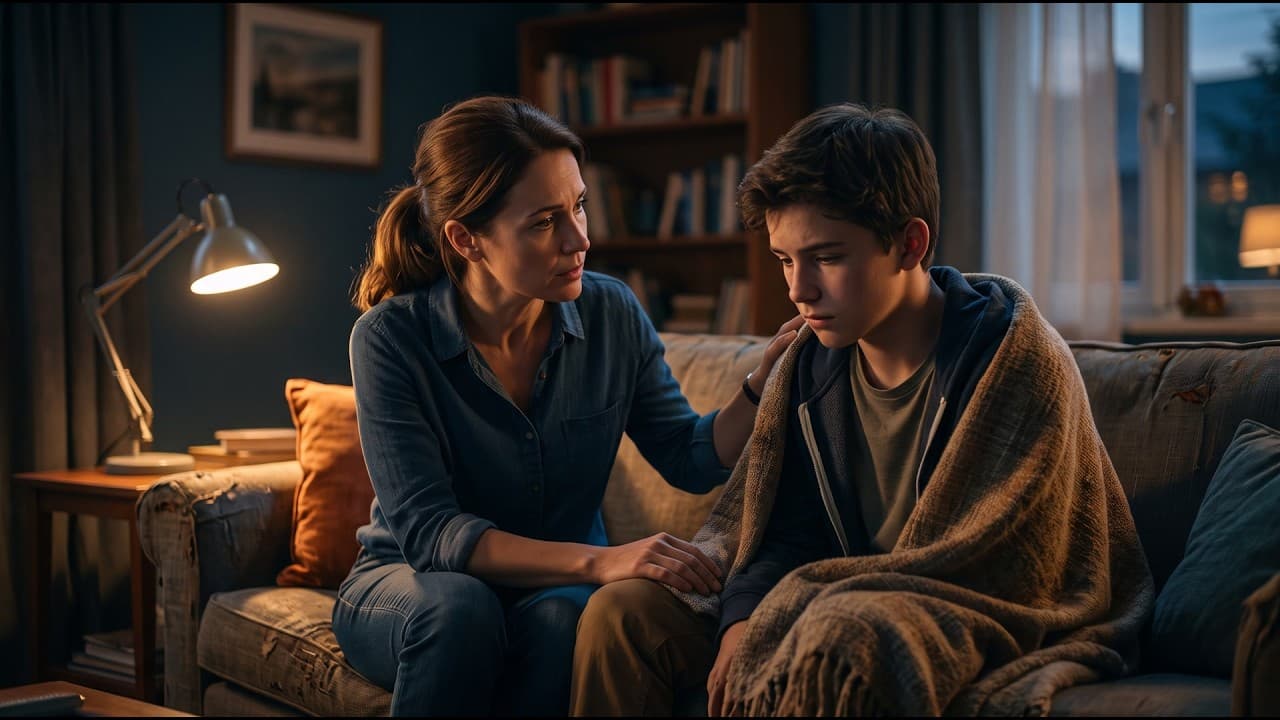
How to help a teen with severe depression?
How to help a teen with severe depression?

Students Raising Siblings: Signs Teachers Miss
Educators and parents: some of the most responsible kids in your building are also the most tired.
Bring this kind of support to your school
Teletherapy, onsite clinicians, live workshops, and HB-268 compliance support for K-12 districts. Book a 15-minute consultation.
Get started