
About this video
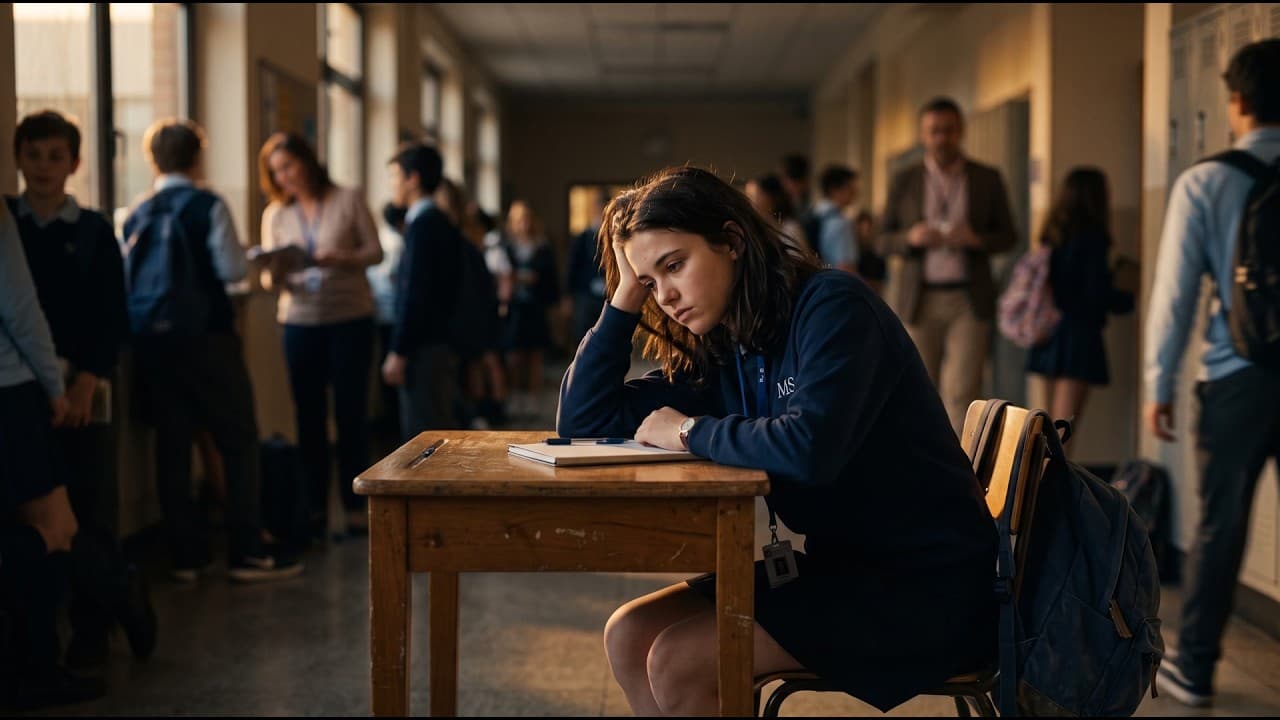
Three questions that have changed how partner counselors and parents talk to a struggling student — before defaulting to 'lazy' or 'doesn't care':
1. Is the absence pattern showing up around specific subjects or specific days of the week? Anxiety is patterned. So is sensory overwhelm. So is bullyin
Generated from MentalSpace School: Georgia K-12 Mental Health and Compliance Guide
Transcript
Welcome to this explainer. Today, we're going to dive into how educators and parents can completely reframe their approach to absentee K-12 students. If you've ever dealt with school refusal, you know exactly how frustrating and isolating it can feel for everyone involved. Well, we're going to break down the source material to show you a really powerful proven framework to shift that dynamic entirely. So, let's start by challenging a really common myth. When a student consistently refuses to get out of bed or skips classes, it's so easy for adults to just assume they're lazy or that they simply don't care about their future. But, we really need to build some empathy here for what they might actually
be experiencing. Ask yourself, is it possible that this refusal isn't defiance, but actual distress? Are they lazy, not caring, or just struggling? Section one, beyond lazy or uncaring. The core paradigm shift here is absolutely crucial. We have to move away from default accusations and turn a discipline conversation into a clinical one. Think about it. A discipline approach basically says, "You're breaking the rules and you will be punished." That just immediately makes a student defensive, right? But, a clinical conversation, that says, "Hey, I see you're struggling. Let's figure out why." It's an invitation to heal. Section two, three questions that change everything. Okay, question number one. Is the absence pattern showing up around specific subjects or
days of the week? You really got to play detective here. Are they consistently sick on Tuesdays? Do they mysteriously miss third period every single time? Asking this simple question is a real game-changer for counselors and parents because it gives you a tangible, practical clue to follow. And why exactly do patterns matter so much? Well, things like anxiety, sensory overwhelm, and bullying are actually highly patterned behaviors. These hidden struggles follow specific schedules. So, if a student gets bullied in the cafeteria every Thursday, or if the fluorescent lights in the science lab cause extreme sensory overwhelm, their attendance record is going to reflect that exact schedule. Moving on to question two. Are there somatic complaints clustering around
school mornings? We're talking about those mysterious stomach aches, sudden headaches, or just unusual heavy fatigue that seems to magically appear right before the bus arrives. Here's the fascinating thing. Bodies process stress way before kids have the words for it. A 9-year-old probably doesn't have the emotional vocabulary to say, "I'm experiencing acute social anxiety today." But, you know what? Their nervous system absolutely knows it and it manifests as a very real, very uncomfortable physical ache. It's literally their early warning system. All right, question three. Has anything shifted recently at home, in friendships, or online? We've got to look outside the four walls of the classroom. Did their parents recently separate? Did a tight-knit friend group suddenly
fracture? Or as we see so often these days, is there some toxic dynamic playing out on social media that's just following them everywhere they go? And this brings us to a foundational quote from the source material. Most school refusal is a downstream symptom of an upstream change. That hits the nail on the head, doesn't it? School refusal isn't the primary disease, it's the downstream symptom. The upstream change, the bullying, the anxiety, the shift at home, that is what we actually need to be treating. Section three, the mental space support system. So, once we know why kids are struggling, how do we actually help them at scale? For schools in Georgia, there's Mental Space. They offer
comprehensive K-12 services providing same-day teletherapy and dedicated therapist teams right at the school level. They handle the really heavy stuff, crisis intervention and suicide and violence prevention, plus they offer staff wellness and family counseling. And the whole shebang is delivered by licensed, diverse, and culturally competent therapists who actually get the student populations they're serving. Now, let's talk logistics because accessibility is literally everything. To make sure there are zero financial barriers, Medicaid patients pay exactly zero dollars. They also accept a massive range of insurance, including BCBS, Cigna, Aetna, UHC, Humana, Peach State, CareSource, and AmeriGroup. And of course, the entire system operates under strict HIPAA and FERPA compliance for absolute privacy. Section four, outcomes of clinical
care. The metrics from this clinical approach are just absolutely staggering. Schools using this intervention are seeing an 89% rate of improved attendance. On top of that, they track a massive 92% reduction in student anxiety and an 85% family satisfaction rate. That is the undeniable power of stepping in with clinical care right at the point of need. It works and it works incredibly fast. Which brings me to the final, most important question for you today. How will you invite your next struggling student to get real help? Remember, turning a discipline issue into a clinical conversation is an invitation, not an accusation. If you're ready to empower your school with these kinds of resources, check out mentalspaceschool.com
or reach out directly at mentalspaceschool@chattherapy.com. Thanks so much for hanging out with me for this explainer and I challenge you to look at tomorrow's empty desk through a completely new lens.
More videos

How to manage ADHD in a 3 year old?
How to manage ADHD in a 3 year old?

How to help a teen with severe depression?
How to help a teen with severe depression?
Students Raising Siblings: Signs Teachers Miss
Educators and parents: some of the most responsible kids in your building are also the most tired.
Bring this kind of support to your school
Teletherapy, onsite clinicians, live workshops, and HB-268 compliance support for K-12 districts. Book a 15-minute consultation.
Get started