
About this video
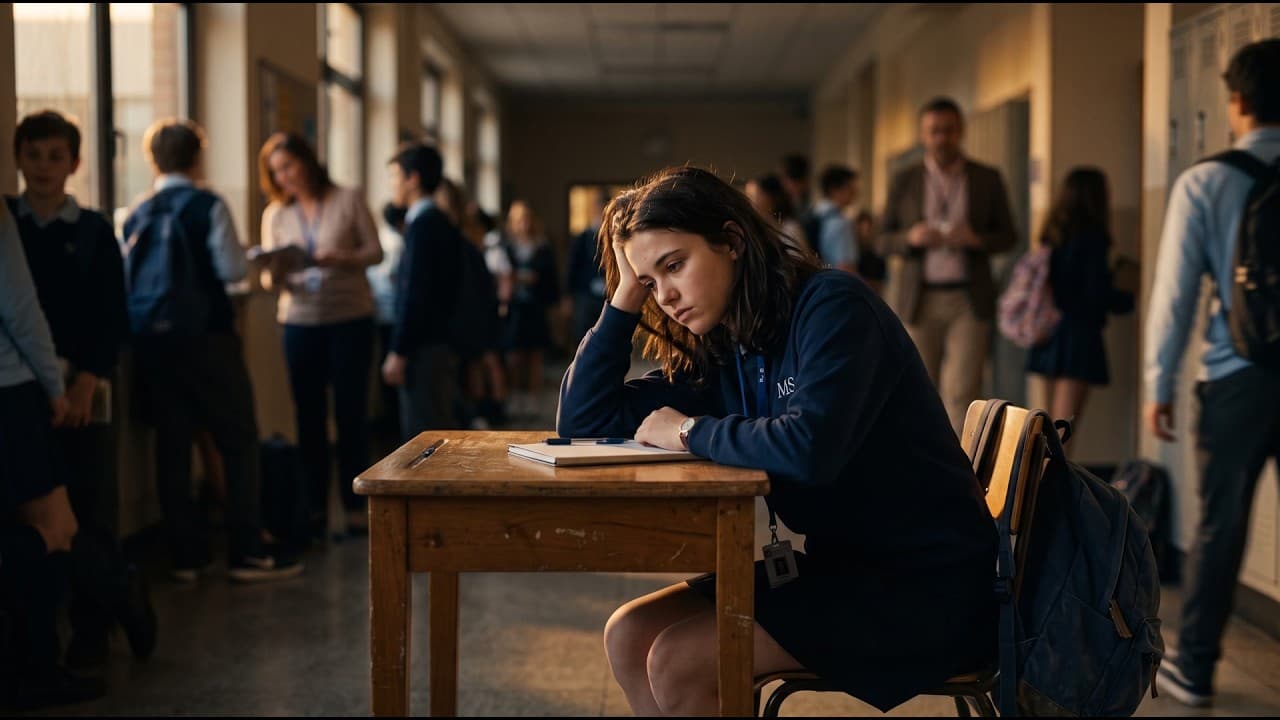
What the social-media-driven sleep crisis actually looks like from inside a classroom:
- The A student whose grades suddenly drop a full letter, with no obvious cause - The kid who used to be sharp in first period now staring blankly at the board - Irritability that wasn't there last semester showi
Generated from MentalSpace School: Georgia K-12 Mental Health and Compliance Guide
Transcript
You have a student who just last semester was sharp and engaged. Now they are sitting perfectly still in first period, staring blankly at the whiteboard while the room seems to fade out around them. This shift starts appearing in the academic data as a sudden fullletter grade drop with no clear cause. At the same time, the school nurse sees a spike in the same students complaining of recurrent headaches and stomach aches that don't have an obvious medical origin. The timing of these incidents is remarkably consistent. Behavioral referrals and reports of inattention are clustering almost entirely in the first and second periods of the day. On paper, these overlapping symptoms, the sudden irritability, the dropping grades, and
physical complaints present as a massive localized epidemic of adolescent mental illness. To address the data, schools route these students into specialized accommodations. These interventions are designed specifically to manage the symptoms of attention and attitude issues. Yet for many students, the academic needle refuses to move. Despite the extra support, the morning incidents persist and the grades remain low. These interventions are stalling because they target the downstream behavior. They attempt to solve a psychological crisis while the true physical cause remains untouched. By following these standard diagnostic pathways, schools often find themselves in a cycle of treating the wrong problem, mistaking a systemic lack of sleep for a primary ADHD or depression crisis. These classroom anomalies are driven
by a specific physical breakdown in the adolescent daily schedule, the 457 loop. The cycle begins at night. On average, a student spends roughly 4 hours scrolling through social media while in bed. That blue light and high engagement delay the body's rest, resulting in just 5 hours of fragmented, lowquality sleep. The student then spends 7 hours trying to perform complex academic tasks while severely sleepdeprived, only to return home and repeat the process. This nightly mechanical loop serves as the invisible engine for the behavioral and academic failures seen in the classroom. The clinical term for this state is sleep mediated cognitive impairment and it creates a massive challenge for school staff. This exhaustion is clinically indistinguishable from
standard psychiatric disorders. The symptoms map over each other almost perfectly. What looks like inattention is often exhaustion. Irritability masks a lack of rest and sematic complaints are the body's physical response to the crash. While primary ADHD and clinical depression are real and often co-present, they are frequently exacerbated by this severe sleep loss. Because the presentation is identical, it is nearly impossible for parents or teachers to separate the digital sleep deficit from a primary psychological disorder through observation alone. Treating a student's severe sleep deficit as a mere bad habit or a lack of parental discipline ignores the clinical reality of the 457 loop. When sleep is dismissed as a secondary behavioral choice, the student remains stuck.
The lack of rest neutralizes every other academic or emotional intervention the school provides. To see real improvement, educators and parents must treat sleep as a critical clinical variable in academic performance rather than an optional lifestyle factor. Without measuring and addressing sleep alongside mental health, school supports will continue to target the wrong symptoms. Untangling these overlapping symptoms requires a coordinated clinical assessment that goes beyond standard disciplinary or academic pathways. Because a teacher cannot tell the difference between a sleepd deprived brain and a depressed one, schools need a professional diagnostic layer. Mental space school provides this by integrating licensed taotherapy teams directly into the school environment to work with existing counselors. These sameday clinical assessments allow experts
to disentangle the presentation, identifying primary anxiety, primary ADHD issues, or a primary sleep deficit. By accurately identifying the upstream source, schools can finally move past the symptoms and implement the sequenced interventions required for a student to thrive.
More videos

How to manage ADHD in a 3 year old?
How to manage ADHD in a 3 year old?

How to help a teen with severe depression?
How to help a teen with severe depression?
Students Raising Siblings: Signs Teachers Miss
Educators and parents: some of the most responsible kids in your building are also the most tired.
Bring this kind of support to your school
Teletherapy, onsite clinicians, live workshops, and HB-268 compliance support for K-12 districts. Book a 15-minute consultation.
Get started