
About this video
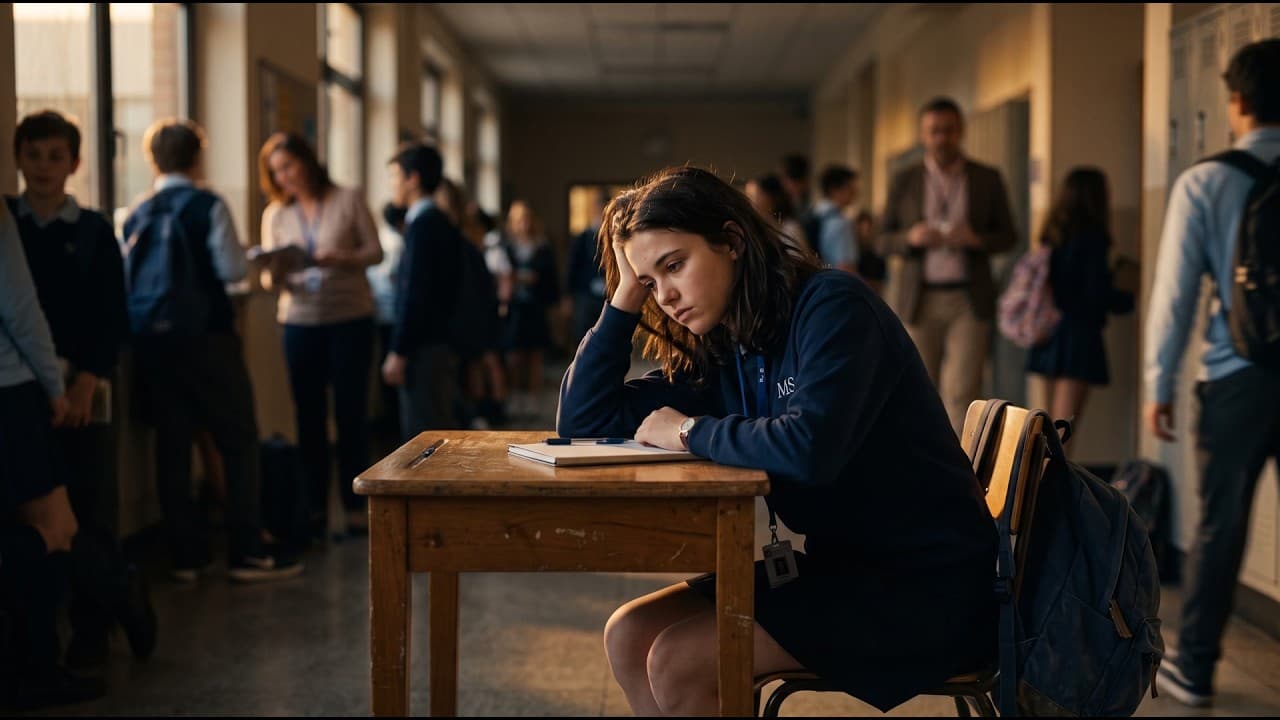
There's a stat that's been quietly reshaping how schools think about attendance: 28% of students are now chronically absent — nearly double pre-pandemic rates. And when researchers look at why, the biggest hidden driver isn't laziness, broken alarm clocks, or 'kids these days.'
It's untreated menta
Generated from MentalSpace School: Georgia K-12 Mental Health and Compliance Guide
Transcript
Okay, let's dive into this. Right now, there's this really urgent kind of quiet crisis unfolding in K12 education. It's drastically affecting schools in Georgia, but honestly, it's sending shock waves way beyond that, too. We're talking about the hidden driver of chronic absenteeism. Every single day, countless desks are just sitting empty, and educators are, you know, scrambling for answers. So, today in this explainer, we're going to use the data and the research to uncover exactly what's causing this. And more importantly, we're going to look at a highly targeted structural solution called mental space that's literally tackling this issue head-on. Let's look at just how big this problem really is. 28%. Right now, 28% of students are
chronically absent. To put that into perspective for you, that is nearly double the preandemic rates. It's an absolutely staggering statistic. We aren't just talking about a few kids, you know, skipping class or taking an extra day off for a long weekend. When over a quarter of a student body is missing significant chunks of the school year, the entire educational ecosystem is strained. The academic impact, sure, it's obvious, but it begs a much deeper question. What is actually happening in our communities to drive this number so incredibly high? So, when we're faced with that 28% absence rate, it's super easy to fall back on those old assumptions, right? People often ask, "Is this just a matter
of broken alarm clocks? Are parents just not enforcing the rules anymore? Is it just kids these days lacking discipline or simple laziness? Honestly, it's just human nature to look for those surface level behavioral failings. But as we unpack the research, we find out the root cause has absolutely nothing to do with a lack of discipline. Actually, scratch that. It's a completely different story and it requires us to rethink pretty much everything we thought we knew about truency. Section one, redefining the root cause, untreated mental health. So the crucial point is when researchers actually look at the why behind that 28% they realize these missing students aren't willfully defiant they are overwhelmed. Recognizing that chronic absenteeism
is very often a cry for help requires a massive paradigm shift. We literally have to move away from the old mindset of asking are they lazy and instead adopt the new mindset what are they avoiding and why. That single fundamental reframe changes the entire conversation. Suddenly, parents, counselors, and clinicians, they're no longer adversaries trying to punish a kid into attending school. Instead, they become a unified team trying to identify a barrier. It opens the door to support that actually fits the child. To truly understand this, we need to ground the clinical data in the visceral daily reality of these students. Like, how does untreated mental health actually manifest when it comes to getting to school?
Well, think about anxiety. When a child has severe anxiety, their nervous system literally marks the school environment as a physical threat. Their bodies are screaming at them to run. Or when a teenager is dealing with depression, failing to get out of bed in the morning isn't a choice. It's not them being lazy. It's a documented clinical symptom of their illness. And for a student who has experienced trauma, the simple act of sitting perfectly still in a fluorescent lit room for 7 hours doesn't just feel boring, it feels completely impossible. This is the battle these kids are fighting every single morning. Section two, the mental space solution. Comprehensive K12 support. And this brilliantly illustrates exactly what
mental space brings to the table. It's a K12 mental health support system specifically designed for Georgia schools offering a deeply holistic approach. They provide sameday taotherapy. That's a huge deal. It means a student in distress doesn't have to wait 3 months on some clinic wait list. They get help that exact day. Plus, they assign dedicated therapist teams per school, which builds all that vital trust and continuity. The program covers immediate crisis intervention as well as absolutely crucial suicide and violence prevention. But they don't stop at the student, you know, they look at the whole ecosystem, offering staff wellness programs and family counseling. And importantly, all these services are delivered by diverse licensed therapists who are
culturally competent that ensures every single student actually feels seen and understood. Now, you might be wondering about the hurdles because of course the two biggest barriers to mental health care are always cost and privacy. Well, mental space completely removes those roadblocks. On the financial side, they accept a massive range of insurance. We're talking Blue Cross Blue Shield, Sigma, Etna, United Healthcare, Humanana, Peach State, Care Source, and Mer Group. But here is the most important part for students on Medicaid. The cost is $0. literally zero dollars out of pocket. That is life-changing access right there. And on the privacy side, they operate under strict compliance with both HIPPA and FURPA, so you can guarantee that sensitive
student health data and educational records remain entirely confidential and protected. Section three, results that matter, transforming school environments. Now, what's really interesting about this slide is seeing how this theory actually transforms a school environment in real life. We need to look at the outcomes to see if treating mental health actually solves that attendance crisis we talked about earlier. And wow, the success metrics here are dramatic. When schools partner with mental space and implement this therapeutic approach, 89% see improved attendance. Just think about that for a second. By treating the anxiety and depression, the kids naturally just come back to the classroom. On top of that, 92% report reduced anxiety among students and 85% report high
family satisfaction. These numbers absolutely prove that addressing the underlying mental health need is infinitely more effective than relying on outdated punitive measures like detention or truency officers. So for the educators, administrators or even parents watching who want to bring these transformative results directly to their own districts, the next step is pretty straightforward. You can reach out directly to partner with them. Their website is mental spacechool.com or you can email them at mentalspacechool@check theapy.com. The infrastructure is already there and the access is available for you to start making a difference right away. So I want to leave you with this final provocative thought. We started out today by looking at a terrifying statistic, that 28% chronic
absenteeism rate. But if we now understand that this rate is actually a symptom of a much larger mental health crisis, are we ready to permanently change how we support our students? Are we finally willing to leave behind that old lazy narrative and fully embrace a truly empathetic therapeutic framework? The data shows the solution is sitting right in front of us. The only question left is, are we ready to use it? Thanks for joining me for this explainer and remember to keep asking the right questions.
More videos

How to manage ADHD in a 3 year old?
How to manage ADHD in a 3 year old?

How to help a teen with severe depression?
How to help a teen with severe depression?
Students Raising Siblings: Signs Teachers Miss
Educators and parents: some of the most responsible kids in your building are also the most tired.
Bring this kind of support to your school
Teletherapy, onsite clinicians, live workshops, and HB-268 compliance support for K-12 districts. Book a 15-minute consultation.
Get started