
About this video
At what age can a child remember trauma?
Most children start forming lasting memories they can describe around ages 3 to 4. But trauma can affect a child much earlier than that, even when there's no memory they could put into words.
This surprises many parents and teachers, so it's worth explainin
Transcript
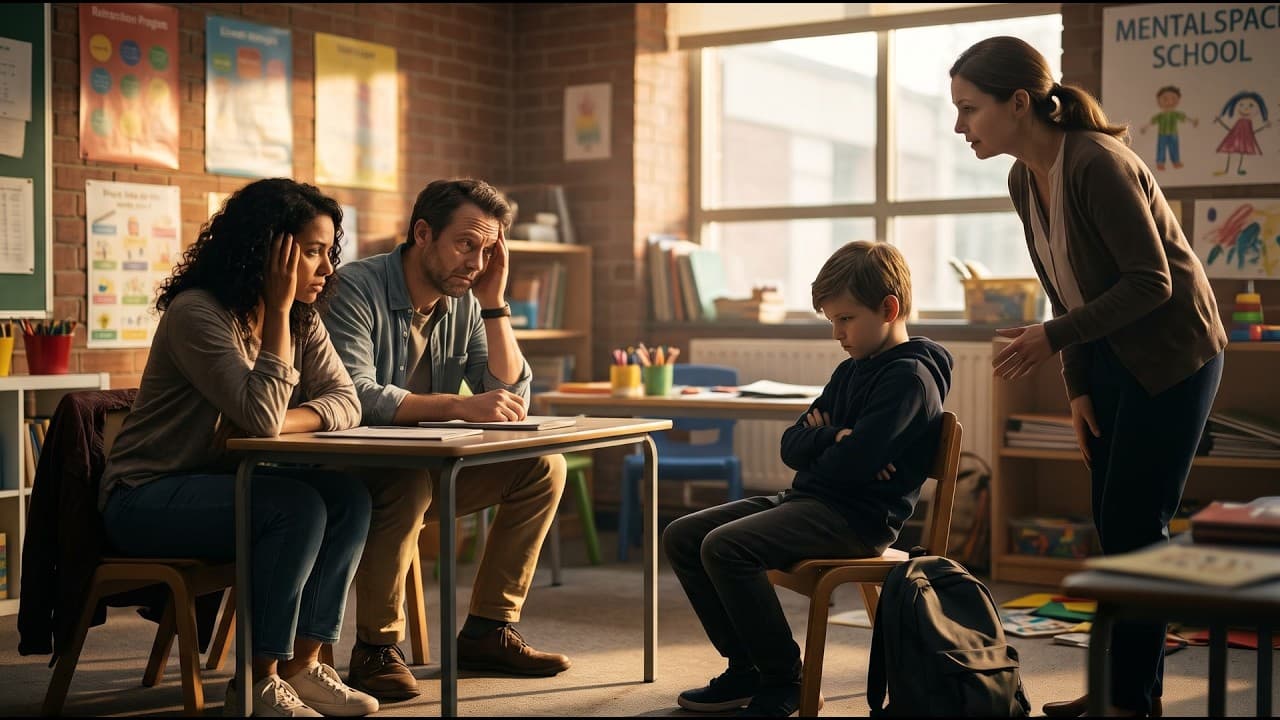
At what age can a child actually remember trauma? Most children begin forming lasting, describable memories around ages 3 to 4. But severe stress impacts the brain much earlier than that, long before a child has the words to explain it. In a classroom, this often manifests as a sudden intense physical reaction. A student might be sitting quietly at their desk, then violently flinch and physically withdraw into themselves in response to a seemingly ordinary event. Adults witnessing this are usually confused. Even if they know the child experienced a difficult infancy, they logically assume the child was simply too young to remember the hardship. This disconnect catches both teachers and parents completely offg guard, stemming from a widespread
misunderstanding of how memory actually functions in the developing brain. When we define memory strictly as a spoken story, we create a massive blind spot. We miss the reality that early trauma is still actively driving the child's present behavior. Science shows us that human memory isn't a single filing cabinet. It operates on two distinct parallel tracks that mature at very different rates. This animated timeline represents explicit memory. This is the conscious story of what happened, where, and who was there. As the points connect to right, you can see how this logical pathway develops very gradually through early childhood. But the body also keeps a subconscious record known as implicit memory. These pulsating waves represent immediate physical
responses stored in the nervous system. Things like a racing heart, a sudden flinch, or overwhelming panic. This chart highlights a critical developmental gap. Notice how the body response bar is fully active in infants and toddlers, while the storyteller bar remains at zero until much later. When trauma occurs in infancy, it bypasses the undeveloped storyteller entirely. Instead, it embeds itself deep within the nervous system as an invisible permanent physical reflex. Bring this dual memory science back into a school environment, and baffling student behavior suddenly makes perfect sense. Educators are actually witnessing implicit memory at work. Signs include an exaggerated startle, constantly scanning the room, or sudden emotional shutdowns. The triggers for these extreme physical reactions are
completely ordinary stimuli. A loud noise in the hallway, an unexpected touch on the shoulder, or even a specific tone of voice can set off the internal alarm. In much younger children, the symptoms look slightly different. The trauma often surfaces as regression and toileting, loss of speech, or severe separation anxiety. Adults frequently mislabel these moments as a student losing focus or acting out. In reality, the child's biology is desperately trying to survive an invisible preverbal record of trauma. Once educators recognize this mechanism, the immediate priority is altering the classroom environment to soothe the child's implicit alarm system. This requires predictable daily routines, consistently calm adult behavior, and mandatory advanced warnings before a fire drill or any
loud disruptive event. But there is a crucial line educators must not cross. If you suspect a child has been harmed, never question them for details about the event. This diagram illustrates exactly why interrogation is so dangerous. Because a child's explicit memory is still fragile and forming, leading questions from an adult act like aggressive arrows, accidentally warping the child's narrative and implanting false memories. A teacher's role is to stabilize the immediate environment and follow school reporting procedures. You must step back and let trained professionals navigate the fragile diagnostic process. Only a licensed clinician possesses the training to safely assess trauma or diagnose a condition like PTSD in a developing brain. Resolving these deep neurological triggers requires
evidence-based clinical treatments like trauma focused CBT for older children or child parent psychotherapy designed specifically for children under six and their caregivers. Delivering this level of care directly into the school environment is the mission of Mental Space School. They provide diverse, culturally competent, and fully licensed therapist teams to K12 partner schools across Georgia. Their ondemand infrastructure covers the entire school ecosystem, offering same day teleaotherapy, crisis intervention, suicide and violence prevention, family counseling, and staff wellness programs. This system is built for strict compliance with HIPPA, FURPA, and HB268 guidelines. It is highly accessible, covered by major providers like BCBS, Sigma, Etna, UHC, and Humanana, and available at zero cost for students on Medicaid. Systemic professional support
is the only safe way to heal invisible childhood trauma. Visit mentalspacechool.com to connect with our therapist teams and access free resources for your school today.
More videos

What is the "3 3 3 rule" for children with anxiety?
What is the "3 3 3 rule" for children with anxiety?
How to punish a child with conduct disorder?
How to punish a child with conduct disorder?

What are some common signs of ADHD in children?
What are some common signs of ADHD in children?
Bring this kind of support to your school
Teletherapy, onsite clinicians, live workshops, and HB-268 compliance support for K-12 districts. Book a 15-minute consultation.
Get started