
In this episode
To the parent reading this at the end of a long day:
You're not failing. You're carrying more than anyone can see.
When a student struggles, families struggle with them — and most parents tell us they didn't know help was available, affordable, or fast. So we'll say it plainly:
Transcript
Usually uh when we talk about a medical diagnosis, there's this underlying expectation of precision. It feels almost like you know engineering, right? Like it's just math. Exactly. Like you break your arm, the X-ray shows that clean jagged white line across the radius and the doctor just points the film and says, "There it is." Put a cast on it and in six weeks you're fine. Yeah, we're good. But then you step into the world of neurodement or um childhood trauma or family mental health and suddenly that X-ray machine is utterly useless. It is entirely murky. And you know that lack of a clear visible fracture is exactly what makes the experience so incredibly isolating for families.
So isolating because there's no cast to sign. Exactly. When a child is struggling internally, there is no cast. There is no predetermined six week healing timeline. which is why I am so glad we're getting into today's deep dive with you. We are looking at two highly revealing sources that tackle this exact landscape. Yeah, these are really powerful documents. One is a service overview for a K through2 program operating in Georgia uh called Mental Space School and the other is this deeply raw, deeply empathetic document simply titled a letter to the parent at the end of a long day. That's a good title. It really is. Okay, let's unpack this because our mission today is to
explore how modern mental health support is being fundamentally redesigned and we really are talking about a massive shift away from that traditional isolated difficult to access clinical model, right? Moving towards something much more radical. We're talking holistic, frictionless, familywide care. We want to see what happens when an entire system is designed to catch a family before they hit rock bottom. But to do that, I think we have to start by acknowledging the emotional stakes, which is really what makes that letter to the parent such a vital starting point for us. Yeah. It doesn't pull any punches. Not at all. You read typical healthcare literature and um it usually just hits you over the head with
clinical jargon on page one. Oh, absolutely. The diagnostic codes, the behavioral intervention plans, right? But this letter doesn't do that. It starts by acknowledging the invisible crushing weight of parenting a struggling child. It sets the table so perfectly. Before we can analyze how a company or like a school district attempts to fix a systemic problem, we really need to understand the cascading effects of that problem on a human level. Yeah. The everyday reality. Exactly. The letter talks about the 11p meter worry. It talks about the Sunday night dread. And let's look at the mechanism of that dread because uh it's not just a fleeting feeling. The letter is describing a literal physiological response. Right? The
nervous system just kicking into overdrive. Yes. When the weekend is ending, a parent's nervous system begins to ramp up because they know the cycle of school related stress is about to restart. Oh, I felt that reading it. And the document illustrates how a child's struggle never remains contained just to the child. It spills over into the entire household ecosystem. Like the sibling, the letter mentions a sibling who suddenly starts acting out, which is such a common dynamic. And that isn't necessarily because the sibling developed a new behavioral issue overnight. It's because the emotional bandwidth of the home has just been depleted. Wow. Yeah, that makes so much sense. The parents are tense, the routines are
disrupted, and the sibling acts out simply to recalibrate their place in a shifting environment. I found myself pausing at the part about marital stress, too. It describes this incredibly common tension where you and your partner fundamentally disagree on whether to be firm or gentle with the struggling child. Oh, the firm versus gentle debate. It tears couples apart. It really does. One parent thinks they need discipline, the other thinks they need grace. You're both operating in the dark. And then on top of that conflict, there's the guilt of asking your own extended family for help. Yes. The letter specifically calls out that feeling of not wanting to call your own mother because you know she'll just
worry. That sentence completely encapsulates the isolation of the modern parent. You know, you are drowning in the deep end, but you refuse to call out for a lifeline because you don't want to burden the person holding the rope. It's heartbreaking. It really makes me think of the sheer executive function drain these parents are under. It's like being an untrained project manager tasked with keeping a massive failing infrastructure a goat. That is a perfect analogy. And I think that's why I get so frustrated with the societal implication that if your household is chaotic, well, you must be failing as a parent, right? The judgment is so heavy. But look at the structural reality of what the
source describes. This parent is tracking medication adjustments. They are coordinating specialist appointments. They're attending IEP meetings which are exhausting all on their own completely. And for anyone who hasn't been through an individualized education program meeting, imagine sitting in a tiny school conference room facing five professionals who are legally mandated to document every single thing your child cannot do. It feels like a legal deposition about your family's flaws. Yes, that is exactly what it feels like. And that is what these parents are doing on a Tuesday morning before they even start their actual jobs. which is precisely why the source material offers such profound validation to anyone listening to us right now who might be living
this reality. It says verbatim, you're not failing. You're carrying more than anyone can see. That gave me chills. You're carrying more than anyone can see. It acknowledges that this invisible backpack you were carrying is heavy and you know the weight is entirely real. So whether you are a parent yourself or maybe you're just observing these family dynamics in your community or your classroom, you know someone carrying this weight. Absolutely. We all do. So we have established this profound exhaustion. But let's look at where a huge portion of that exhaustion actually comes from. It comes from friction. Yes, the friction is the real enemy here. Every single step of getting mental health support in the traditional
system requires a family to jump through a flaming hoop. It's what we might call the friction theory of mental health. Oh. Oh, I like that. the friction theory. Yeah. Because the primary barrier to pediatric mental health isn't a lack of desire to get better. It's the micro frictions of the health care system. Getting a referral from a pediatrician, waiting months for an intake, fighting with out of network billing. The billing, right? It entirely depletes a family's already exhausted executive function. If the traditional clinic model creates all this friction, the solution has to mathematically scale a zero friction model. But how do you actually do that without bankrupting a family or you know a school district?
If I look at mental space school as a case study for this paradigm shift, I have to be a little skeptical. Sure. Zero friction sounds like a startup making promises it can't keep. Exactly. How do they actually dismantle these barriers? Well, what's fascinating here is how the logistical architecture of mental space directly attacks that friction theory. Let's break down the actual mechanics they outline. First, same day taotherapy. Wait, same day access. Really? Same day. In the traditional model, the clinical bottleneck is devastating. You call a private practice and they put your child on a six-month wait list just for a 20-minute intake evaluation. Right. I've tried to book virtual therapy for myself and even the
massive Silicon Valley therapy apps take weeks to match you with someone who has actual availability. Exactly. But mental space school bypasses that by embedding dedicated clinical teams specifically designated for their partner schools. They aren't relying on the open markets availability. The fact that they can do this on day one is wild to me. But let's talk about the biggest friction point of all, which is the money. The financial barrier is always where the system breaks a family. The document highlights a 0 cost with Medicaid, which is incredible. Now, that alone is a massive step for equitable access, but they don't stop at Medicaid. The service overview lists a sweeping array of accepted in-et network insuranceances.
Yeah, I saw that list. They specifically name BCBS, Sigma, Etna, UHC, Humanana, Peach State, Carosource, and Amera Group, which I know reads a bit like a corporate directory, but let's explain the mechanism of why blanketing the insurance landscape like that is so critical. Please do because it's vital. In the traditional system, a desperate parent finally finds a therapist who has an opening, but that therapist is out of network. So, the parent has to pay, say, $200 upfront for the session, if they even have $200 lying around. Exactly. Then they get a piece of paper called a super bill. They have to log into their insurance provider's broken web portal, submit the super bill, fight with
an adjuster over a missing modifier code, and wait 90 days to maybe get a $40 reimbursement. Just hearing you describe it is exhausting. Right. The cognitive load of that process is exactly why families give up. By aggressively securing in network status across all those major carriers, Mental Space School eliminates the Super Bill nightmare entirely. Exactly. The friction of the transaction is removed before the parent even makes the phone call. And speaking of making the call, the letter explicitly states that families do not need a referral. Oh wow. No referral at all. None. You don't have to figure out the diagnostic code before you ask for help. You don't have to wait until your child gets
suspended to prove to a gatekeeper that you've tried everything else. You just reach out. Let's look at the quotes the source provides from parents who actually went through this new process. One parent said, "I didn't know it could be a video call that changed everything." Such a simple realization, but so profound. And structurally, that makes so much sense to me. We tend to think of tellahalth as just you know zoom for therapy. But for a kid it is so much more than that. It's the removal of an environmental stressor momentarily. For a child with severe anxiety, ADHD or autism, simply transitioning from the house to the car is a major hurdle. Driving 45 minutes across
town to sit in a sterile waiting room with fluorescent lights and weird magazines. That transition alone can trigger a massive meltdown. You're entirely right. By allowing the child to engage from a familiar environment, whether that's a quiet room at their school or their own bedroom, you are lowering their neurological defenses before the therapist even says hello. That is huge. And there's another parent quote in the source that points to a different deeply vital kind of access. The quote says, "My kid actually opened up, I think, because the therapist looked like them." Which speaks directly to the reality of building clinical trust. you are asking a teenager to sit down in front of a screen and
be intensely vulnerable. And the source explicitly ties that outcome to their staffing model. They highlight the provision of licensed therapists who are diverse and culturally competent, which honestly sounds like it could just be a corporate buzzword on a brochure, but it's not. It's a clinical mechanism. When a student sees a professional who reflects their own cultural context, the clinical report is accelerated. the defensive wall of well you couldn't possibly understand my lived experience is dismantled much faster. Here's where it gets really interesting. Once you remove these barriers, the weight lists, the out of network billing, the geographic travel, the cultural disconnects, you aren't just treating an isolated child in a vacuum anymore. You start to
alter the entire operating system of the school. That is a perfect way to phrase it. Thank you. If we think in the traditional model, treating a single struggling student in isolation is like trying to force quit a single lagging application on a computer while the entire hard drive is failing. Oh, it's good. Mental Space School's integrated K through2 model is more like upgrading the RAM for the entire operating system so the network stops crashing. Their service overview outlines school-le interventions that go far beyond individual therapy. You like them? They provide crisis intervention. They provide suicide and violence prevention which is a heavy but absolute necessity for school administrators today. And uh I noticed they also
specifically list staff wellness. They are actively offering support to the teachers and the faculty because the faculty are the front line of this ecosystem. If you have a teacher who is severely burnt out, dealing with secondary trauma from managing unresourced, highly stressed students all day, that teacher's dysregulation transfers right back into the classroom environment. It's all connected. By supporting the staff, you are stabilizing the environment the child spends 7 hours a day in. And it extends to the home environment, too. There's a parent quote in the document that really stuck with me. They said, "I needed someone to talk to, too. I don't realize I needed family counseling, not just sessions for my child." There's
that invisible backpack we talked about earlier. Exactly. The parent has been carrying the weight for so long, they've completely normalized their own suffering, they don't even realize their posture is broken until the system finally turns around and offers to help them carry it. It fundamentally reshapes the family dynamic. Now, from a purely operational standpoint for the school districts, the source details another layer of systemic relief. Mental Space School provides HB268 compliance support ahead of the July 2026 deadline. Let's pause there and explain what that actually means. Because if you are an administrator in Georgia, HB268 just sounds like random bureaucratic numbers. Very true. HB268 is a legislative mandate requiring schools to formalize and track their
mental health infrastructure and protocols. Now, think about the mechanism of that burden. It sounds like a lot of paperwork. It is. A school principal went to school to be an educator, not a hospital administrator. Yet, the state is mandating that they build, track, and report on clinical mental health pipelines. How do they even do that exactly? How do they staff it? Who trains the staff? How do they prove compliance to the state by 2026? It's an administrative nightmare that drains time and funding away from actual education. Precisely. So when a program like this comes in and says we will manage the clinical side and we will provide the compliance data you need for the state
they are taking a massive legislative binder right off the principal's desk. It offloads the operational friction. So we have a model that removes friction for the parent removes friction for the student and removes friction for the school administration. A total ecosystem approach. But as we analyze this as a case study the real question is does the friction theory hold up in practice? Let's look at the data the source provides. If we connect this to the bigger picture, the outcomes they list are highly compelling. They report an 89% improvement in attendance among the students utilizing the program. 89%. I want you to really think about that number. It's staggering because school avoidance truency is very rarely
just a kid deciding they don't feel like going to class. School avoidance is a biological nervous system response. It is a fightor-flight reaction to the Sunday night dread we talked about. Absolutely. If attendance is improving by 89% it means the underlying nervous system of the student body is actually settling down. That aligns perfectly with the next statistic the source offers which is a 92% reduction in anxiety. Oh yeah. When you place the support directly inside the child's daily ecosystem, the anxiety isn't allowed to compound into a crisis. And to tie it back to the home, they report an 85% family satisfaction rate. So it's working on all fronts. The data paints a clear picture. When
you treat mental health care not as an emergency room visit you make when everything is broken, but as a frictionless standard part of the educational background, it directly drives both academic success and household stability. So what does this all mean? If we synthesize the data, the legislative shifts, and that incredibly raw parent letter, we are looking at the death of the waiting room. That's a great way to put it. We're looking at a system that realizes you cannot ask a family who is already running on fumes to navigate a bureaucratic maze just to speak to a therapist. Help has to be immediate. It has to be culturally resonant and it absolutely has to be financially
accessible. And for anyone listening who heard their own life described in the struggles of that letter, the takeaway is that the architecture of help is changing. The source directs families and school leaders to explore this specific model at mental spacechool.com or via email at mentalspacechool@jet theapy.com which serves as a great reference point if you want to see exactly how this zero friction model is being deployed in the real world. It really is a proof of concept that things don't have to be as hard as they have been. You really don't. Exactly. I want to bring our focus back to the emotional core of this deep dive, though, because the closing sentiment of the letter to
the parent is what anchors all the data and the logistics we've discussed. It's such a beautiful ending to that letter. It reminds the reader that parenting happens in incredibly hard seasons. You are managing a highly complex, constantly changing human dynamic. And the letter leaves parents with this profound piece of grace. It says, "You are doing the best you can with information that's incomplete." That's all parents have ever had. Information that's incomplete. I just think that is such a remarkably forgiving way to look at the immense struggle of raising a human being. It gives you permission to stop punishing yourself for not having X-ray vision into your child's mind. It normalizes the struggle. And you know
normalizing the struggle is the very first mechanical step in alleviating the shame that prevents a family from reaching out for that taotherapy or that family counseling in the first place. Which leaves me with a final thought for you, our listener, to take away today. We talked at the very beginning of this deep dive about how we all secretly wish mental health was like a broken arm, just a clean, jagged white line on an X-ray film that we could easily point to and quickly fix. Yeah, if only it were that simple. But maybe the real fracture we've been dealing with all these years hasn't been inside the individual child at all. Maybe the fracture has been
in the environment around them. Oh, that's an interesting thought. We've been living with the sheer friction of a health care system that made getting help so exhausting that it was simply easier to suffer in silence. If a child's ecosystem, their siblings, their parents, their teachers so profoundly absorbs their stress and their anxiety, we have to ask ourselves a bigger question. What's that? If we take models like this and we make mental health care a standard, invisible, and truly frictionless part of the daily school experience, how might that change the literal trajectory of an entire generation's adulthood? If we fix the systems broken bones, maybe the kids won't have to carry that invisible weight to the
rest of their lives. Thanks for joining us on this deep dive. We'll catch you next time.
More episodes
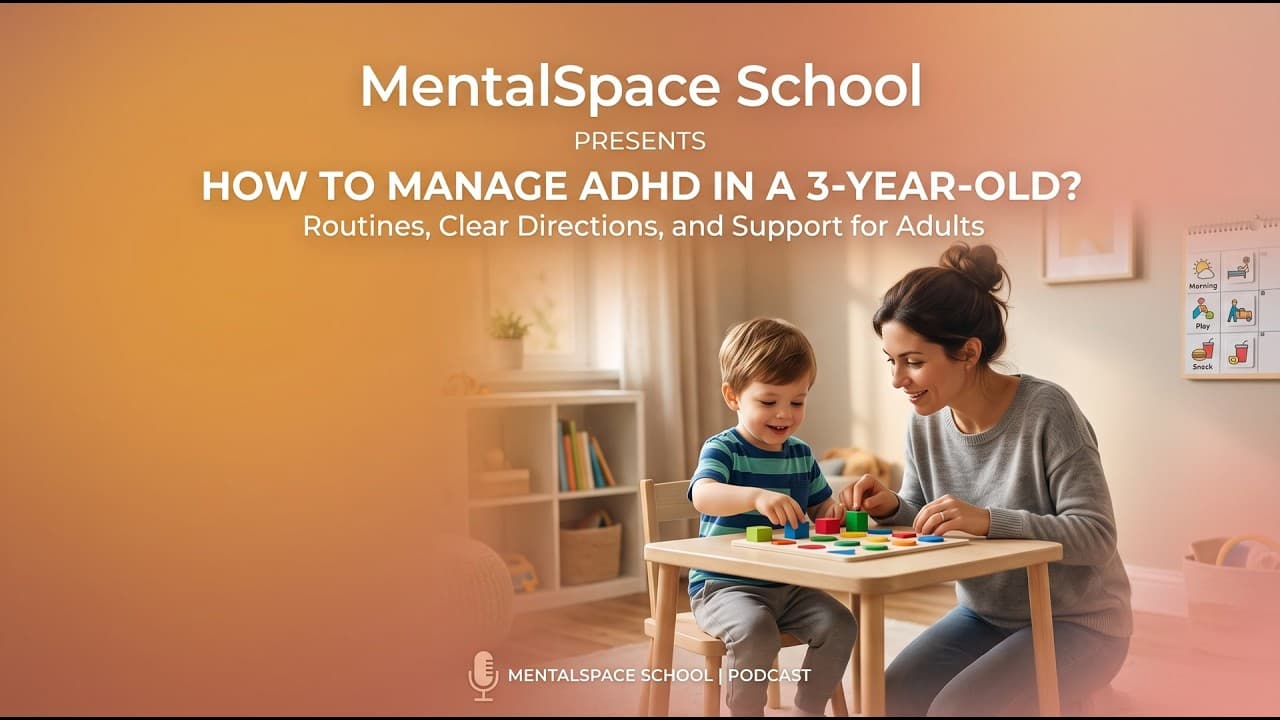
How to manage ADHD in a 3 year old? — Full Episode
How to manage ADHD in a 3 year old?
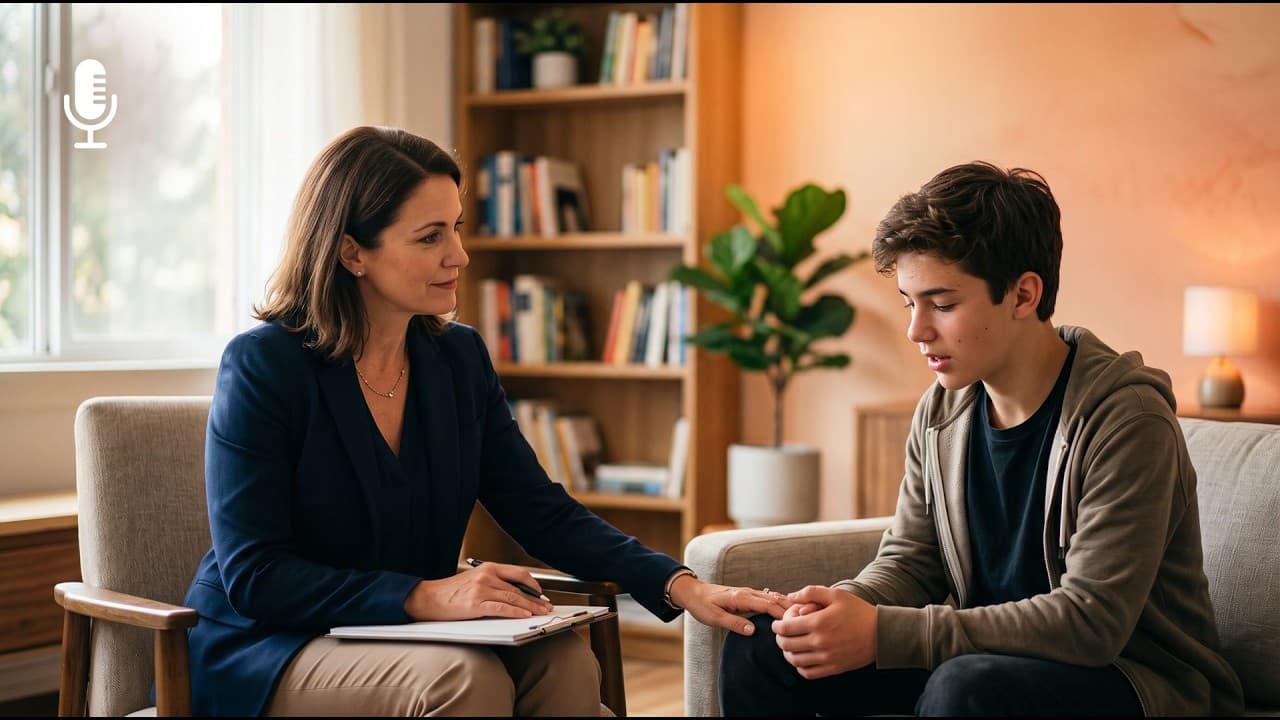
How to help a teen with severe depression? — Full Episode
How to help a teen with severe depression?
When a Teen Becomes the Parent: Sibling Care and School
Educators and parents: some of the most responsible kids in your building are also the most tired.
Need this kind of support in your school?
MentalSpace School delivers teletherapy, onsite clinicians, live workshops, and HB-268 compliance support to K-12 districts nationwide. Book a 15-minute call to see what fits.
Get started