
In this episode
To the family quietly worried tonight — this one's for you. 💛
When a child has Tourette's, often with co-occurring OCD, it can feel isolating. But those tics and rituals aren't misbehavior. They're neurological, and your child is not choosing them.
Signs you might see: • Repeated movements or voc
Transcript
Welcome to today's deep dive. I am so glad you are joining us for this one because um we're tackling something that I think touches a lot of families. Yeah, it really does. Our mission today is to explore the intersection of pediatric mental health conditions and well these really innovative school-based delivery systems, right? Because the way we deliver care right now is I mean it's fundamentally flawed for a lot of kids. Exactly. So for our sources today, we are looking at two really compelling documents. First, we have a very compassionate clinical briefing on pediatric Tourettes and co-occurring OCD. And second, we have an operational overview of this program called mental space school. It's a uh comprehensive
K through 12 mental health support program down in Georgia. And looking at both of these together gives us such a complete picture. It does. Okay, let's unpack this. We have this core tension, right? We have brilliant, highly effective, evidence-based therapies for kids. Yeah, the clinical science is actually amazing right now, but they are basically useless if families can't actually access them. So, today we are looking at how this one program in Georgia is bridging that massive gap and honestly changing the whole narrative around kids who just get labeled as difficult. Right? Because before we can even talk about the systemic care model, we have to understand the kids themselves. Yeah. We need to understand the
very real and honestly deeply misunderstood neurological challenges these kids are facing every single day. Right. The invisible struggle. The briefing goes into pediatric Tourette's and uh the co-occurring OCD that often comes with it which is incredibly common. Yeah. And it outlines the signs that families usually notice first. So you have these sudden repeated movements or sounds the ticking the physical or vocal tick. And then on the OCD side, you see these rituals, you know, checking things over and over or repeating certain actions because they're being driven by these completely overwhelming anxious thoughts. And that distress just multiplies when you put the child in a stressful or highly social setting like a classroom. Exactly. What's fascinating
here is the crucial reframing that the text emphasizes. It explicitly states that these symptoms are neurological. They are not behavioral. That is such a huge distinction. It changes everything. The ticks aren't the child acting out, right? And those intrusive thoughts, the rituals, they aren't the child being difficult. Their brain is literally misfiring. I was trying to think of how to describe this. And um it's like trying to stop a sneeze by just wishing it away. Oh, that's a really good way to put it, right? Like imagine sitting in a completely silent math class, feeling a sneeze building up in your nose, and knowing that if you actually sneeze, you'll get sent to the principal's office.
Sounds like torture. It is. You wouldn't discipline a child for sneezing. So, we absolutely have to stop punishing these kids for neurological symptoms. Absolutely. And the briefing uses this phrase that just really stuck with me. It says, "Families don't have to white knuckle through this anymore." Yeah. That visual of just gripping the steering wheel, right? just trying to survive the day completely exhausted. So once we stop treating these realities as discipline problems, um how do we actually help them? Right. Moving from just having empathy to taking real clinical action. Exactly. Because the sources mention some very specific evidence-based treatments. They do. They highlight CBIT for the ticks and ERP for the OCD. Okay. Let's break
those down. What is CBIT? So CBIT stands for comprehensive behavioral intervention for ticks. Okay. And um it's a highly targeted therapy. The clinician basically trains the child to recognize the urge that happens right before the tick. Like the tickle before the squeeze. Exactly. And once the child can feel that urge coming on, they are taught a competing response. Wait, what does that mean? It means they do a specific physical movement that makes the tick impossible to do. So if the tick is jerking their neck, they might subtly tense their core or their neck muscles so the head physically cannot jerk. Oh wow. Yeah. And over time doing that competing response actually helps take back control.
The urge itself starts to decrease. That is incredible. And then what about the OCD side? The ERP, right? So ERP is exposure and response prevention. Okay. This is where the therapist carefully exposes the child to the thing that triggers their OCD anxiety, but then supports them in not doing the ritual they normally do to cope. So they just have to sit with the anxiety. Yes. They learn that the anxiety will eventually peak and then come down on its own without them having to tap the desk four times or wash their hands again. Why? It literally helps them take back control so the child and their whole family really can finally just breathe again. Okay, so
these therapies sound incredibly effective, but I have to push back here. Sure, these are highly highly specialized interventions. Specialized. Yeah. So, how does a working stressed out family actually get a child to a specialty clinic for this kind of care without completely upending their whole lives? That is the big question. Like, you have to take time off work, pull the kid out of school in the middle of the day, drive an hour across town. I mean, it's just not realistic for most people. No, it's not. And that's exactly why the delivery system has historically been the biggest barrier to care, right? The therapies exist, but getting them to the kids is a nightmare. Which brings
us to the second source document, the mental space school model in Georgia. Exactly. They are answering that exact logistical nightmare. Okay, here's where it gets really interesting because they aren't just opening another clinic. They are bringing the clinic into the K through 12 classroom. Yes, they embed dedicated therapist teams for each specific school. And it's not just, you know, a counselor who visits once a month. No, the document specifies these are dedicated teams offering sameday taotherapy. Same day. That's unheard of. It is. And these therapists are licensed, diverse, and culturally competent, which the operational overview highlights as a huge priority. So, if a child is having a crisis, like an OCD spiral in the middle
of second period, they don't have to wait 3 weeks for an appointment. They get sameday teleotherapy right there in a safe, private space at the school. If we connect this to the bigger picture, this is a massive shift. How so? We are moving from a reactive external health care model where you wait for the kid to fall apart and then ship them off to a clinic to a proactive embedded model. You're treating them in the environment where the stress is actually happening. Exactly. But okay, anytime you mix healthcare and public schools, you run into a mountain of red tape. Oh, absolutely. The bureaucracy is intense. Right. Because you have privacy laws for hospitals and privacy
laws for schools. Yeah. Hip and furper. And they don't usually play nice together. But the mental space model is designed specifically to be fully compliant with both HIPPA and FURPA. They secure the medical data while still legally looping in the school staff who need to know how to support the kid. That's a huge hurdle cleared. But then there is the cost. I mean specialized therapy like CBIT or ERP that is expensive. It is. But the document points out something amazing. For Medicaid patients, the cost is zero dollars. Wait, really? Zero dollars. Zero. And they also accept a massive range of commercial insuranceances. Let me look at the list here. Uh they take BCBS, Sigma, Etna,
UHC, Humanana, Peach State, Care Source, and Amer Group. Yeah, they cast a very wide net. So, they are completely removing that financial barrier, which we really need to pause and think about. The socioeconomic impact of that zero dollars for Medicaid detail is profound. Oh, for sure. Removing the financial barrier is what truly allows families to stop white knuckling through these crises. You aren't just rich enough to buy your kid a cure. It's democratized. But even with the cost covered for families, schools are still bound by state budgets and laws. Right. And looking at the operational document, I noticed something incredibly timely. Oh, the legislative deadline. Yes, they mentioned providing compliance support for something called HB268.
It says the deadline is July 2026. Right. For you listening at home, today's date is literally July 4, 2026. Yeah. Meaning schools in Georgia are hitting this exact crucial legislative deadline right now, this week. It's happening as we speak. So, what does a mandate like HB268 actually do? Well, these kinds of state mandates basically tell schools you have to have a documented operational mental health crisis protocol. You can't just call the police or an ambulance anymore. But they don't usually give the schools the money to build that protocol. Exactly. So administrators are panicking, but mental space steps in and says, "We already built the infrastructure. Partner with us and you are instantly legally compliant." Wow.
So it solves the school's legal headache and gets the kids free care. It's a win-win. So when you combine these targeted neurological treatments, the CBIT and ERP with this hyperaccessible, zerocost, fully compliant delivery system, what actually happens? You get some pretty staggering results. Let's look at the measurable outcomes on the ground from the overview. The numbers are really something. They report an 89% improved attendance rate, which is huge, and a 92% reduction in anxiety. 92%. That is a life-changing metric for those kids. and then an 85% family satisfaction rate. So what does this all mean when you look beyond just the individual therapy? Well, this raises an important question. It challenges how we traditionally view
education and mental health. How so? Because the mental space overview lists a whole broader ecosystem of services they provide. Right. I see that. It's not just the one-on-one student sessions. No, they are doing crisis intervention, suicide, and violence prevention. And really crucially, staff wellness and family counseling. Wait, staff wellness? Why are they treating the teachers? Because you can't just treat the student in a vacuum, right? If a child is learning how to manage their OCD, but their teacher is completely burnt out and triggered and the parents at home are stressed and don't understand the therapy, the kid is just going to regress. Exactly. You have to treat the whole ecosystem. By including staff wellness and
family counseling, they are supporting the entire environment around the child. That makes total sense. That's how you get an 89% jump in attendance. You fix the environment, you fix the attendance. That is just incredible. Okay, so just to recap our journey on this deep dive today. Yeah, it's been a lot of ground covered. We started by understanding the very real neurological nature of conditions like pediatric Tourette's and OCD, right? Moving away from seeing them as behavioral problems. And we looked at those highly specific interventions like CBIT and ERP that actually give kids their control back. Mhm. And finally, we explored this revolutionary hyperaccessible delivery system from Mental Space School in Georgia that actually gets these
therapies to the kids who need them. Right. Where they already are. Exactly. So, for any families or school administrators listening who are looking to take the next step, especially with these new compliance mandates hitting right now, you definitely want to check out the contact info provided in our sources. Yes, you can reach out and explore their K through2 programs by visiting mentalspacechool.com or you can email them directly at mentalchool@pruptherapy.com. I highly recommend looking into it. And um I want to leave you with one final thought to mle over as we wrap up today. We have just seen the data, right? Embedding mental health care directly into schools, the place where kids spend the majority of
their day, can yield an 89% improvement in attendance. It's massive. But what would happen if we applied this exact embedded care model to other childhood environments? Oh, that's interesting, right? Like what if after school sports leagues or local community centers or summer camps adopted this model? Just put the care everywhere the kids are. Exactly. How much human potential is just out there waiting to be unlocked simply by putting the clinical support exactly where the kids already are? It's a really powerful question. It really is. Well, thank you so much for exploring this with me today and thank you all for listening to this deep dive. We will catch you on the next one.
More episodes
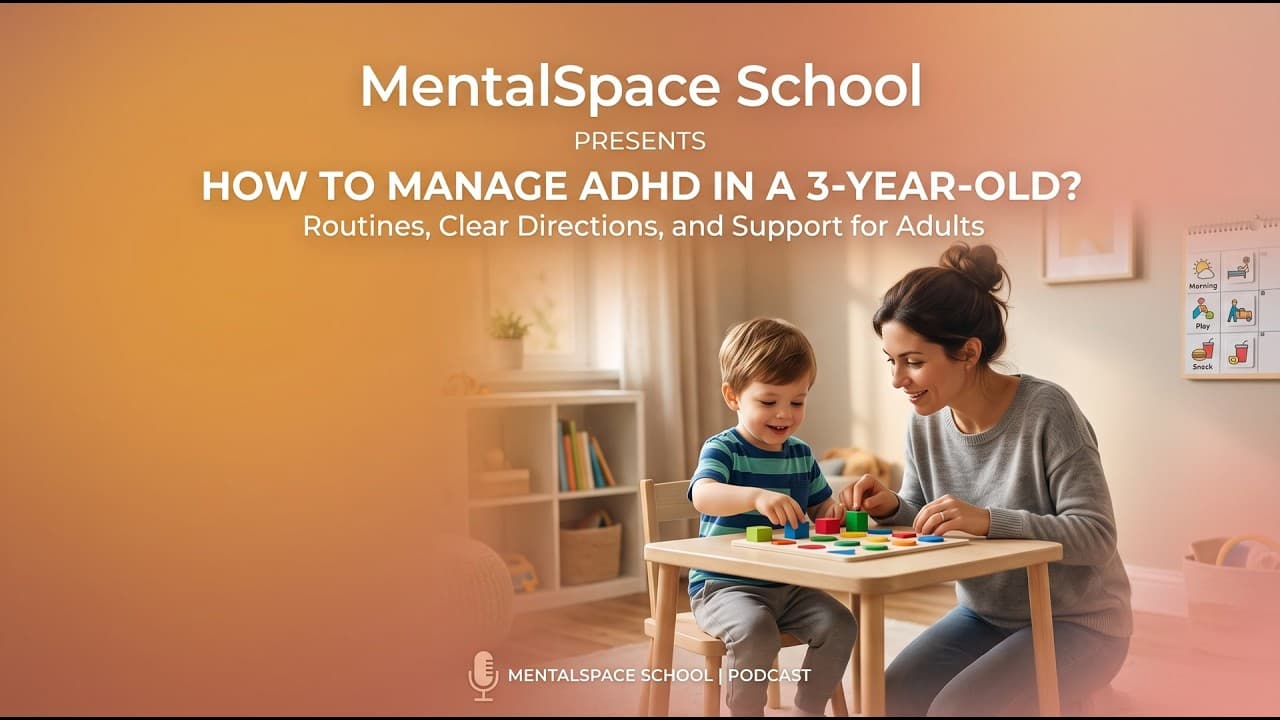
How to manage ADHD in a 3 year old? — Full Episode
How to manage ADHD in a 3 year old?
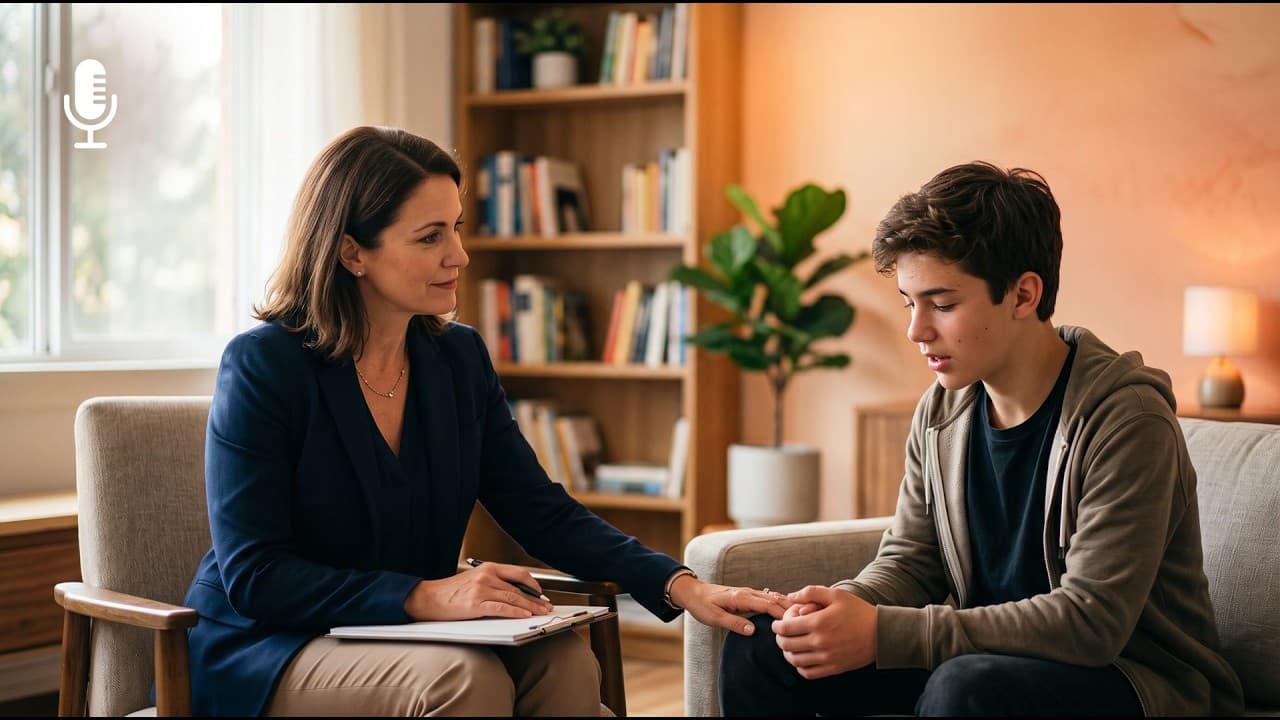
How to help a teen with severe depression? — Full Episode
How to help a teen with severe depression?
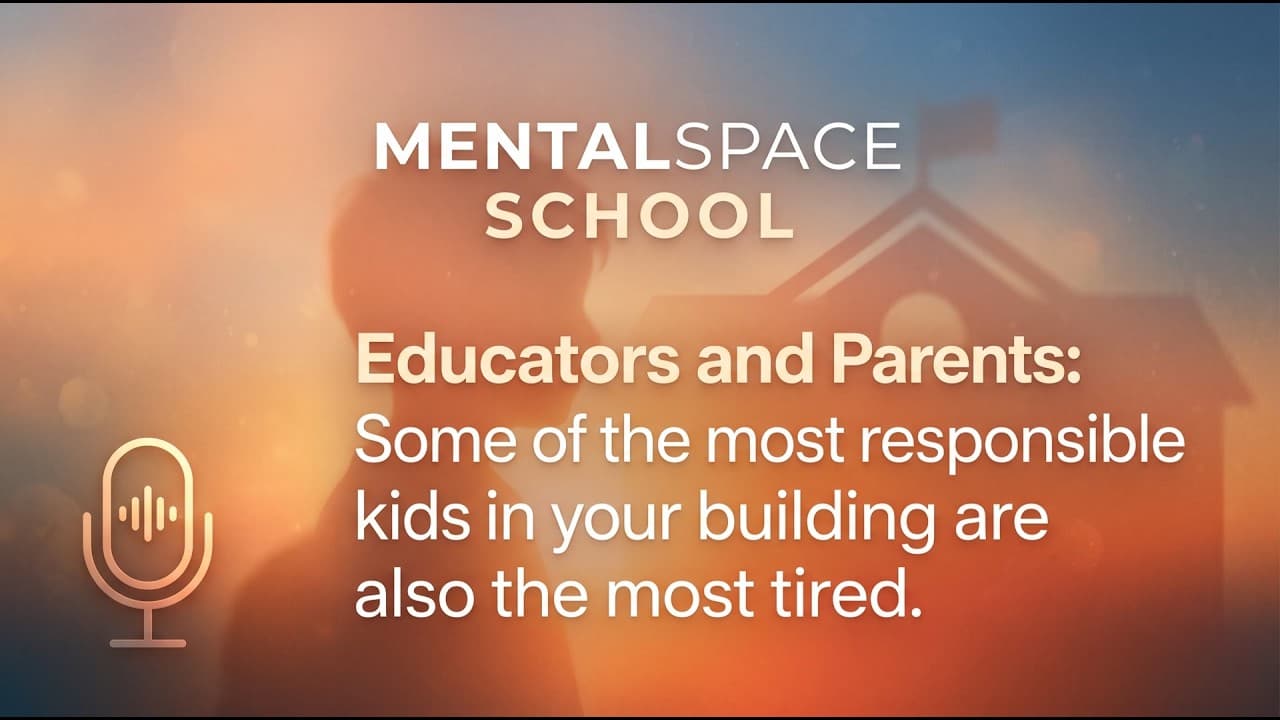
When a Teen Becomes the Parent: Sibling Care and School
Educators and parents: some of the most responsible kids in your building are also the most tired.
Need this kind of support in your school?
MentalSpace School delivers teletherapy, onsite clinicians, live workshops, and HB-268 compliance support to K-12 districts nationwide. Book a 15-minute call to see what fits.
Get started