
In this episode
If you're the parent who has been called into the principal's office one more time this month — read this slowly.
You are not failing. Your child is not broken. And what's happening at school is almost certainly not a discipline problem dressed up as a mental health one.
It's the other way around.
Transcript
So, picture this, right? It is Tuesday afternoon. You are in the middle of your workday trying to focus on a dozen different things and um suddenly your phone lights up. Oh, yeah. That dreaded moment. Exactly. You glance down and you see the caller ID. It is your child's school again, right? Your stomach just instantly drops because you already know what the voice on the other end is going to say. You know, they need you to come down to the principal's office. Yeah. It's an awful feeling. It really is. And if you are the parent who has been receiving that repeating phone call, who feels that specific knot of dread forming in your chest right now,
um we really need you to listen very closely to this deep dive today. Absolutely. Because the core message here is just so important. You are not failing and your child is not broken. I mean, that is the only place to start really. Yeah. Because that repeating phone call, it creates this heavy insidious narrative over time. It really does. It tells you that there is a fundamental flaw, you know, like either in your parenting or in your child's character, right? Like somebody is doing something wrong. Exactly. Yeah. But the framework we are looking at today completely shatters that narrative. Yeah. We are diving deep into an operational model called bridging the gap clinical support for Georgia
schools. And this is alongside an initiative known as mental space school which is just a fascinating program. It really is. And the core revelation here is that those constant trips to the principal's office. Um they are rarely about defiance. They are about misread signals. So our mission today is to decode the true meaning behind these persistent quote unquote discipline problems in Georgia schools. Right. We are going to explore how shifting from a punitive lens to a clinical lens can I mean just completely transform a student's trajectory. Oh and rapidly too. Yeah. We'll get to the speed of it later, which is wild. But before we get to the solution, we really need to understand the
disconnect first. We do. Okay, let's unpack this. It feels like um like a smirk detector going off because you're simply boiling water, but the school is treating it like a raging fire. I like that analogy, right? Like the alarm is blaring, the panic is there, but the response is entirely mismatched to the actual event. Yeah, I like the smoke detector idea, but let's actually take it a step further into the biology of what is happening in that classroom. Okay, let's do it. So, when that alarm goes off, right, when a student acts out, disrupts the class, or, you know, withdraws entirely, the school is doing its absolute best to respond. Sure. They're trying to manage
a room full of kids. Exactly. But they are restricted by the tools and the lenses they have at their disposal. Mhm. Typically, schools operate primarily through a discipline lens, right? They see the behavior, they identify a broken rule, and they apply a consequence. They see the smoke, assume a fire, and basically bring out the fire extinguisher. Yeah. Which in a school setting looks like detention or suspension or a stern talking to in the principal's office, right? They're reacting to the noise. Exactly. But they are completely missing the root cause of the behavior. Now, what's fascinating here is the mechanics behind that noise. What looks to a teacher or administrator like a discipline problem is well,
it's very often a clinical issue underneath. A clinical issue. Yeah. The surface behavior is actually a signal of underlying childhood and adolescent anxiety or OCD or trauma. Let's look at the brain signs for a second. Okay. When a child with untreated trauma or severe anxiety is triggered by something in their environment, um maybe it's a loud noise or a specific tone of voice from a teacher or even just the overwhelming sensory input of a crowded hallway. I mean, in middle schools are loud. Exactly. When that happens, their amydala just takes over. And the amydala being the brain's threat detection center, right? Like the fight orflight alarm. Yes. And when the amydala hijack happens, the prefrontal
cortex, which is the logical, rule following, forward thinking part of the brain, it essentially goes offline, completely offline. The child is no longer choosing to be defiant. They are in pure survival mode. Wow. So, let's ground this in a real world scenario so we can really picture it. Let's say a kid throws a heavy textbook on the floor, refuses to sit in their assigned seat, and starts talking back aggressively to the teacher. A classic discipline referral, right? The discipline lens says, "This child is being defiant, disrespecting authority, and needs to be punished so they learn to follow the rules." Exactly. So, the school applies the consequence, hoping it changes the behavior. But the consequence actually
reinforces the threat because they're already in survival mode. Right. The clinical lens, on the other hand, says, "This child is experiencing an overwhelming sensory trigger, or this child's OCD is locking them into a panic state." That makes so much sense. A clinically trained therapist looks at that same behavior, the book throwing, the refusal to sit, and they understand the temperature of the room. They can read the underlying signals. Yeah. They know how to deescalate the nervous system before even attempting to address the behavior. And that completely flips the script on how we handle these moments. It really does because instead of handing down a punishment, which honestly probably just adds more stress and makes the
anxiety or trauma response worse, it almost always does, right? A clinical therapist actually builds coping and regulation skills directly with your child. Yeah. They are intervening at the root level to interrupt the negative cycle. They are teaching the child how to get their prefrontal cortex back online and they coordinate with the school to change the environment or the approach. Maybe that child needs um a five minute reset protocol before transitions, you know. Oh, sure. Or a specific way of receiving instructions. It is about removing the friction rather than trying to force the child to comply through punitive measures. Which brings us to the actual mechanics of how we fix this systemically because we can't just
tell overwhelmed parents, hey, your kid needs a clinical lens. Go find a private therapist. Right. Figure out your insurance. Coordinate with the teachers yourself. Yeah, good luck. I mean, the burden is already way too high for families. Way too high. So, here's where it gets really interesting. We are looking at the mental space school partnership in Georgia. Yes. But let me stop and push back for a second because I know exactly what people are thinking right now. Okay, let's hear it. Don't schools already have guidance counselors? I mean, why do they need a dedicated outside clinical team brought into the building? It is a massive difference in scope, training, and capacity. Okay, how so? Well,
guidance counselors are incredible essential professionals, but if you look at their day-to-day reality, they are tasked with academic scheduling, college prep, standardized testing logistics. Oh, wow. Yeah. Mediating playground disputes. Exactly. Yeah. And providing general schoolwide emotional support. A single counselor might be responsible for four or 500 students. That's insane. They're stretched incredibly thin and they simply do not have the time or in some cases the specific clinical psychiatric training to provide intensive ongoing therapy for severe trauma or anxiety disorders. Mental space school on the other hand provides comprehensive K12 mental health support tailored specifically for these environments. Right? And the key differentiator is that we are not talking about an occasional check-in. These are dedicated
therapist teams assigned to each individual school. That dedicated integration changes everything. They aren't just a 1-800 number you call for advice. Yeah. They become part of the school's ecosystem and the services go far beyond what a typical counseling office can manage. Mental Space offers same day teleaotherapy, which is huge. Think about what that means for a student in acute distress. They don't go on a wait list for 6 weeks while their behavior spirals. They get support that very day. Let me pause you there, though, because the logistics of that sound, well, tricky. Sure. How does same day teleaotherapy actually work in a bustling middle school without completely ostracizing the kid or disrupting their education? It's
a fair question. I can just imagine a parent worrying that pulling a child out of class for therapy is going to make them fall behind academically. That is a very common, very valid concern. But the logistical integration is designed specifically to minimize that friction. Okay. So, how do they do it? Well, a student isn't paraded out of the room in front of their peers. Usually, there is a designated private quiet space in the school like an empty office or something often near the counselor's office or the clinic. Yeah. And it's equipped with a secure tablet or computer. The student slips out, has their session in a confidential environment, and regulates their nervous system. That sounds
pretty seamless. It is. And as for the academic concern, the reality is that a disregulated brain cannot learn. You cannot absorb a math lesson if your amydala is screaming that you are in danger. That is such a good point. So, by taking 30 or 45 minutes to regulate the nervous system, you actually giving them back the rest of their school day. Exactly. Rather than losing them to an office referral or, you know, a multi-day suspension, you are rescuing their academic potential, not hindering it. Yeah. And alongside the teleotherapy, this model includes crisis intervention, suicide and violence prevention programs, and even staff wellness programs. Wait, really? For the teachers? Yes. The designers of this initiative recognize
that teachers and administrators are experiencing secondary trauma and burnout, too. Oh, absolutely. You cannot have a healthy student body without a supported staff. Plus, they offer family counseling, which bridges the gap between the school environment and the home environment. That's incredible. And I noticed a specific emphasis on the personnel and the source materials, too. These aren't just like general practitioners. No, not at all. The model heavily emphasizes providing licensed, diverse, and culturally competent therapists. Cultural competence is a vital mechanism for clinical success here. Yeah. Explain that a bit more. Well, when a student is sitting across the screen from a therapist trying to articulate really complex feelings of anxiety, having a therapist who understands their
cultural background, their community context, and their lived experience, it just accelerates the process incredibly. Exactly. It removes the barrier of having to explain your existence before you can explain your pain. It builds trust instantly. It is the difference between a student feeling studied and a student feeling seen. Beautifully put. And when that connection happens, when the clinical lens is finally applied by the right professional, the results are just staggering. They really are. The timeline for these interventions is what stopped me in my tracks. When families are connected to the right care through this specific clinical pathway, the trajectory shifts in weeks. Yes, not years, weeks. That speed is the power of accurate diagnosis combined with
targeted intervention. Right? Because when you spend years trying to discipline an anxiety disorder out of a child, you get nowhere. You probably just make it worse. In fact, the child's self-esteem plummets and you often go backward. But when you apply the correct clinical framework, you teach the child how to recognize their own internal alarms. You give them the owner's manual to their own brain. Yes. The child desperately wants to feel better and be successful. They just lack the tools. Yeah, once they have them, the adaptation is remarkably fast. Okay, I am sold on the clinical side. Good. But let's talk about the real world for a second. Let's do it. What does this all mean
for the parents wallet and you know the school district's bureaucracy, the fun stuff, right? Because whenever someone pitches a revolutionary comprehensive program with dedicated clinical teams and sameday taotherapy, the immediate assumption is that the system is going to be a total nightmare to navigate. Naturally, the red tape alone is usually enough to make a parent give up and the out-ofpocket costs. They can be astronomical. So, how does this actually function on the ground in Georgia? This is perhaps the most practical element of the entire blueprint because a systemic fix is entirely useless if it is financially inaccessible to the families who need it most. Exactly. The referral pathway is designed to be seamless. Financially, they
are in network with an extensive list of both private and public providers. Yet, they cover a massive portion of the insured population through all the major corporate health plans. Okay, but what about the families who are the most economically vulnerable? the families who might not have tier one private insurance who are already carrying the heaviest systemic burdens. The barrier there has been completely removed. Really? The cost is absolutely $0 with Medicaid. Wait, really? At $0? 0. It is a monumental shift for equity and mental health access. It means that the parent dreading that phone call from the principal doesn't also have to dread the therapy bill that follows. That is huge. The care is there
and it is covered. Okay, so the financial side for the parents is handled. But what about the school's burden? Schools are heavily regulated, incredibly complex environments. Administrators can't just let an outside medical team start working with students without massive compliance checks, liability reviews, legal signoffs. The mental space program is fully integrated into the legal and privacy framework schools require from day one. M they are completely HIPPA compliant which protects the medical privacy of the student of course and fully furpa compliant which protects their educational records but beyond basic privacy this program solves a massive looming headache for school administrators in Georgia. Ah you were talking about the HB268 compliance. Yes I saw that in the
source materials. Yeah. For anyone outside the administrative bubble HB268 is a major piece of legislation in Georgia. Right. It essentially mandates that schools have highly specific, actionable school safety and anti-gang plans. And these plans heavily feature threat assessment and mental health intervention protocols. And the deadline for full compliance hits in July 2026. Exactly. Right now, school districts are losing sleep trying to figure out how to build and fund these comprehensive mental health infrastructures to meet the state's legal requirements. Ah, so this isn't just a nice to have wellness program for the schools. It is an operational solution. It solves their problem directly. By partnering with a clinical team that already has the infrastructure, crisis intervention,
and preventative mental health protocols in place, administrators can just check off major legal and compliance boxes that they are legally mandated to meet anyway. It relieves an enormous administrative burden. They get legal compliance and a safer school environment, and the kids get the clinical care they actually need. It's a total win-win. It really is. But you know, compliance and insurance networks are just the logistics, right? The ultimate proof of any system is its outcomes. And the hard numbers prove that this model works undeniably. I hear the numbers. The data tracks an 89% rate of improved attendance for students in the program. Wow. I want to pause on that 89%. Because um improved attendance isn't just
a metric on a spreadsheet. No, it's not. We tend to think of skipping school as a behavioral issue, like a teenager just wanting to sleep in or hang out with friends, right? But if a child is chronically refusing to go to school or cutting class to hide in the bathroom, that is an avoidance behavior. That is a child whose nervous system views the school environment as a threat or a source of unmanageable anxiety. That is the exact mechanism at play. The attendance number is essentially a proxy for the child's internal state of security. M an 89% improvement means that 89% of the time the clinical intervention has successfully made that child feel safe enough and
capable enough to willingly re-enter an environment that used to trigger their fight orflight response. That is incredibly powerful and that ties perfectly into the next metric which is a 92% rate of reduced anxiety. Yeah. I mean when the anxiety drops by 92% of course the attendance goes up. Exactly. Of course, the discipline referrals drop. The boiling water has been taken off the stove. The smoke detector goes quiet. And the final ripple effect of all this is an 85% family satisfaction rate, which considering these are families who were likely trapped in a very dark, stressful cycle of principal visits, suspensions, and overwhelming feelings of failure. An 85% satisfaction rate is phenomenal. It really is. It means
families are finally feeling supported as partners in their child's well-being rather than feeling judged as the root cause of the problem. So true. And for any parent or school administrator listening who recognizes their own situation in this discussion um and who wants to initiate this clinical assessment, the pathway to take action is very straightforward, right? How do they do it? They can reach out directly via their website at mentalspacechool.com or email them at mentalspacechool@juch theapy.com. The infrastructure is already built and waiting to be utilized. So let's bring this all together. The core takeaway from today's deep dive is a profound paradigm shift in how we view the children in our schools. Yeah. What looks like
misbehavior, what looks like defiance, disrespect, or apathy is almost always a deeply buried cry for clinical support. Exactly. By swapping out that traditional discipline lens for a clinical one through comprehensive, accessible, and integrated programs like mental space school, families and educators in Georgia have the power to stop the endless principal visits. You really can. You can trade the punitive cycle for genuine healing. And as the science and the data show, you can start seeing that shift in a matter of weeks. It is a remarkable transformation to witness. It really is. And if we connect this to the bigger picture, it really makes you think beyond just the K12 environment. How do you mean? Well, if
the misbehavior we punish so strictly in children is often just an unarticulated clinical need, you know, a nervous system in distress, how many quote unquote discipline problems in the adult world, in our workplaces, in our relationships, or in our communities are actually just untreated anxiety or trauma? Oh wow. Just waiting for someone to finally look at them through the right lens.
More episodes
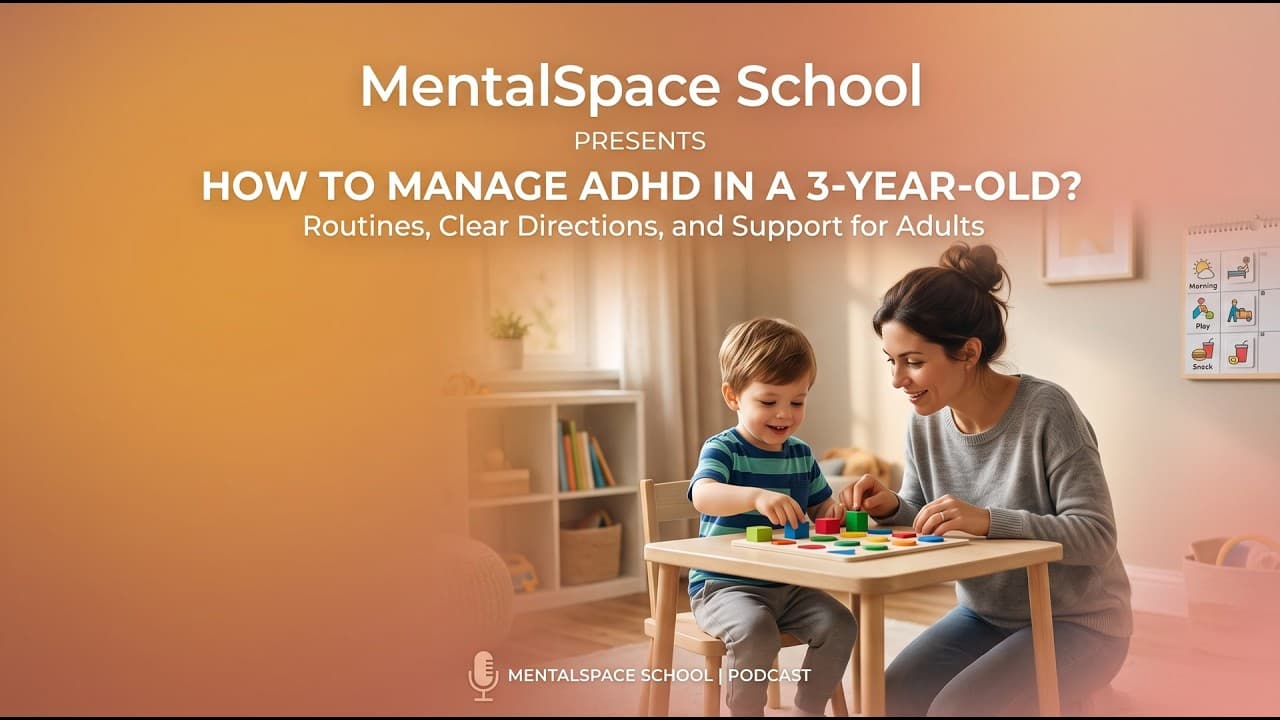
How to manage ADHD in a 3 year old? — Full Episode
How to manage ADHD in a 3 year old?
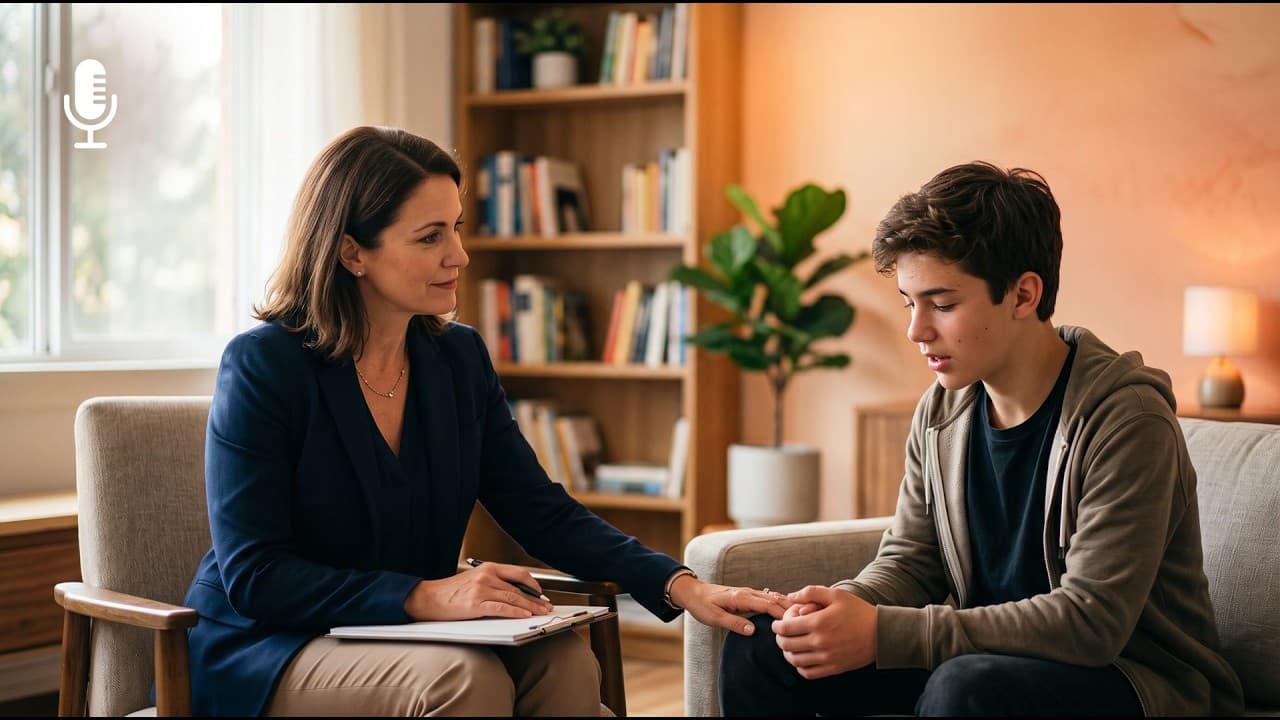
How to help a teen with severe depression? — Full Episode
How to help a teen with severe depression?
When a Teen Becomes the Parent: Sibling Care and School
Educators and parents: some of the most responsible kids in your building are also the most tired.
Need this kind of support in your school?
MentalSpace School delivers teletherapy, onsite clinicians, live workshops, and HB-268 compliance support to K-12 districts nationwide. Book a 15-minute call to see what fits.
Get started