
In this episode
At MentalSpace School, we believe three things: 1. Every student deserves access to mental health care — regardless of income, location, or background. 2. Every educator deserves wellness support — because you can't pour from an empty cup. 3. Every family deserves to be part of the solution — with a
Generated from MentalSpace School: Georgia K-12 Mental Health and Compliance Guide
#MentalSpaceSchool #SchoolMentalHealth #K12Wellness #Podcast
Transcript
every 11 minutes. That is um about the time it takes for a brief school recess. Yeah. Or just a quick drive down the street to the grocery store. Right. But it is also devastatingly how often a young person in the United States dies by suicide. It's just a staggering reality to sit with. It really is. So, welcome to today's deep dive. If you've been wondering how our educational system is possibly going to handle a youth mental health crisis of this sheer magnitude, well, you are in the exact right place. Absolutely. Today we are looking at a stack of source material regarding this ticking clock. But our mission here isn't just to, you know, sit here
and sound an alarm. Right. There's enough of that already. Exactly. We are dissecting a tangible barrier-breaking framework called mental space school that is actively attempting to solve it. And you know, when you start with that 11 minute metric, yeah, it completely shatters the traditional view of what a school is actually supposed to be prepared for. Oh, for sure. Historically, we rely on the school nurse's office, right? You picture the cot in the corner, the thermometer, the band-aids, the magical plastic baggie full of ice that cures everything. Exactly. The magical ice. But that entire system is built exclusively for physical visible injuries. A student scrapes a knee on the playground, they get a bandage, they run
a fever, you call the parents, send them home. It's a completely binary visible system of care. But the injuries driving that 11-minute statistic are entirely invisible. I mean, a plastic baggie of ice does absolutely nothing for a student who is quietly spiraling into a severe, depressive episode in the back row of a math class. No, it doesn't. We are looking at a landscape where the old physical first aid model is fundamentally breaking down and asking teachers to just like keep an eye out isn't cutting it anymore. The stakes are simply too high for passive observation now. And the data in your sources is unambiguous on this. Waiting for a tragedy to happen and then deploying
a bunch of grief counselors is a failed model. Yeah, it's totally reactive. Right. The proven solution is proactive prevention. When schools have dedicated mental health professionals embedded in their systems and establish prevention protocols running daily, they catch the student who is withdrawing long before they reach that critical crisis point and the outcomes improve dramatically, drastically. It's night and day. Okay, let's unpack this because knowing that prevention works is one thing, right? actually forcing a massive historically slowmoving bureaucracy like the public educational system to implement it. That is another universe entirely. Have you left? But according to the documents we're reviewing, the state of Georgia isn't waiting around for schools to slowly figure it out. They
have dropped a massive legislative mandate. We're looking at Georgia House Bill 268. Yeah. And House Bill 268 comes with a very firm, unavoidable deadline, which is July 2026. That's practically tomorrow in government time. It really is. Every public school in the state has to have comprehensive safety protocols fully operational by that date. And the requirements are incredibly heavy. I mean, they aren't just telling schools to put up a few suicide hotline posters in the cafeteria. No, not at all. They are mandating behavioral threat assessment teams. They are requiring specific suicide and violence prevention training tailored for grades 6 through 12. They want student advocacy specialists, dedicated mental health coordination. It's huge. is a massive overhaul.
Now, looking at this list, I have to pause because the term behavioral threat assessment team sounds like something out of, I don't know, a tactical espionage movie. What does that actually look like inside a normal middle school? Well, I know it does sound intimidating, but in a clinical and educational setting, a threat assessment team is essentially a multidisciplinary safety net. Okay. Okay. So, instead of operating in silos like where a teacher notices a student drawing something concerning but keeps it to themselves and maybe a counselor notices a sudden drop in attendance and a principal deals with an unexplained outburst in the hallway. So, all these isolated incidents Exactly. The team acts as a central nervous
system. It pulls together the administration, mental health professionals, and educators to pull those isolated red flags. Yeah. The whole goal is to evaluate if a student is on a pathway to violence or self harm and intervene with support, not just punishment. That makes a lot of sense. But it also sounds incredibly resource inensive. Like, if I'm a principal, I am already stretched impossibly thin. My teachers are overworked. My budget is tight. Always. And now the state is telling me I have to build what sounds like a fully functioning psychiatric triage unit while classes are currently in session. How does a normal public school absorb that kind of mandate without just collapsing under the logistics? What's
fascinating here is how the state is attempting to bridge that exact gap. They haven't just handed down an unfunded mandate. Oh, they haven't? No. Georgia has actually allocated $20 million in funding specifically dedicated to student behavioral health to back up HB268. They recognize that building this infrastructure requires real capital. Okay, but let's be real, about $20 million. If you take that money and funnel it through the bureaucracy of hundreds of school districts across the state trying to have every single building hire their own full-time private clinical psychiatrists. Oh, it's gone. Exactly. That money evaporates instantly. The bureaucracy swallows it. The hiring process takes years and you end up with a fraction of the actual care
reaching the students. Which is precisely why a school cannot do this in a vacuum. Yeah. The traditional model of a district directly hiring and managing clinical medical staff is way too expensive and far too slow to meet a 2026 deadline. Right? That friction establishes the absolute necessity for a comprehensive external partner. The schools need an entity that already has the clinical infrastructure built. Enter mental space school. According to the sources, they are stepping into this exact gap, looking at school districts and saying, "Look, we can help you meet every single one of these HB268 requirements." Yeah, they are taking it head on. But naturally, the very first question any school board, any administrator or taxpayer
is going to ask is about the price tag. Like, how much is this going to drain from our already tight educational budget? Of course, and this is where the model completely flips the script. Mental Space offers comprehensive K12 support at zero cost to the school district. And by offering it at no cost to the district, they remove the single largest friction point in public education, which is the budget battle. They aren't fighting for a slice of the school's pie. But, you know, nothing is truly free. How are they outfitting schools with licensed therapists, crisis assessments, and staff wellness programs without charging the school? Well, they are shifting the financial burden entirely out of the educational
sector and placing it into the healthcare sector where it actually belongs. Interesting. How so? They do this by utilizing existing healthcare funding structures. So for private insurance, they accept the major carriers Blue Cross, Blue Shield, Sigma, Etna, United Healthcare, Humanana. Okay. But the most critical piece for accessibility is their integration with Medicaid. Right. The sources explicitly highlight that for families on Medicaid, specifically mentioning plans like Peach State, Care Source, and Amer Group, there is a 0 co-ay. That is massive. I want to emphasize how huge that is. For a lowincome family, choosing between paying for weekly therapy out of pocket and paying for groceries, that isn't a choice at all. No, therapy loses every single
time. Exactly. By navigating the Medicaid billing for the families, mental space removes cost as a barrier to entry. We also should note that medical billing, especially Medicaid billing, is an absolute administrative nightmare. Oh, I can only imagine. Schools are educational institutions. They are not equipped to act as medical billing departments. Mental space absorbs that massive administrative headache so the school doesn't have to. Okay, so they solve the budget problem for the district and they solve the cost problem for the low-income families. But that brings us to the geography problem. Let's say you are in a rural district in South Georgia. The nearest pediatric psychiatrist or licensed child therapist might be an hour or more away.
Even if you have the funding and even if Medicaid covers the session perfectly, the physical bodies just aren't in the room. Right? You cannot legally mandate that a professional be there if that professional literally does not exist in that zip code. And this is where the logistical elegance of their model really shines. They utilize a secure taotherapy platform to completely bypass the physical distance. Okay. So going digital. Exactly. They can provide same day crisis assessments, ongoing therapy, and even family counseling through a digital interface. Yeah. And the documentation is very very careful to stress that this isn't just a standard commercial video call. Like it's not just popping on to Skype or whatever. No. The
platform is strictly HIPPO and FORPA compliant. Let's do a quick translation on those acronyms for anyone who doesn't spend their days reading federal privacy laws. We all generally know EPO, right? It's the law that protects your medical records at the doctor's office, but Furpa is the educational equivalent. It protects student privacy and educational records. Mixing a student's medical data with their school disciplinary or academic data is traditionally a massive legal minefield. It's a huge liability. Yeah. So by ensuring the platform is compliant with both mental space allows a therapist to securely interface with the school's administration without violating the students federal rights. It basically creates a secure digital room where healthcare and education can actually
talk to each other legally. Here's where it gets really interesting though because I have to push back on this combination of factors. Okay, go for it. When I read no cost to the district, Medicaid covers it and taotherapy my skepticism flares up. We are currently facing a massive welldocumented national shortage of licensed child psychologists and therapists. Yes, we are. Some private clinics have six-month weight lists. So, how is Mental Space magically staffing entire school districts? And more importantly, what is the quality of this care? That's the million-doll question, right? Is this just a generic one-sizefits-all Zoom call? If a student is having a severe panic attack, do they just get handed a school iPad and
routed to some random call center therapist three states away who doesn't even know what town they are in? Yeah, that would be terrible. Because if that's the case, we are just checking bureaucratic boxes for HB268 compliance with without actually helping these kids. That's well, if we connect this to the bigger picture, the labor shortage you mentioned is the exact reason tele therapy is the only viable mechanism to solve this crisis. Oh, so it allows you to pull a highly fragmented labor force. Like you might have a licensed clinical social worker who only have three spare hours a week. A physical school cannot hire someone for 3 hours, right? That doesn't work. But a teleaalth platform
can absorb those hours and deploy them instantly to the schools that need them, unlocking previously inaccessible professional time. Ah, okay. That makes sense. As for the quality of care, the sources detail a very specific three-step approach designed entirely to prevent that detached generic experience. They do not just hand a kid an iPad and hope for the best. Good. So, explain how those steps actually work mechanically because that seems to be the makeorb breakak detail for the quality of care here. Sure. Step one is what they call the mental space insight survey. And when they say survey, they aren't talking about sending a basic multiple choice questionnaire to the principal. So, not a quick 10 question
email. No, no. They are mechanically mapping the behavioral health ecosystem of that specific building. They analyze absentee data, local socioeconomic stressors, and community dynamics. Think about it. A rural high school dealing with the economic collapse of local agricultural jobs has a profoundly different stress profile than a middle school in a rapidly gentrifying downtown urban center. The survey takes a hyper local diagnostic of the building before they ever even turn on a camera. So they are basically taking the temperature of the community first. Yes. Then step two, they take that map data and design a custom mental health program specifically tailored for that exact school community. Okay, that's step two. But step three is the lynch
pin that directly answers your call center worry. They assign a dedicated therapist team to that specific school with ongoing support. Wait, really? So it's not a random professional logging on every time. No, it is the same licensed therapists assigned to that building. So they become virtual faculty members essentially. Precisely. They learn the culture of the school. They build relationships with the administration, the teachers, and those threat assessment teams we talked about earlier. Oh, that's fantastic. By the time a student sits down in front of that screen for a same day crisis assessment, they're talking to a professional who is already deeply embedded in their school's specific daily rhythm. Okay, that changes the dynamic completely because
if you solve the geography with teleaalth and you solve the money with insurance and Medicaid and you pull the labor force, that is incredibly impressive on a logistical spreadsheet. It is. That gets the student into the room and the screen turned on. But putting a teenager in front of a screen is really only half the battle. Therapy is essentially translation. That's a great way to put it. And teenagers are already incredibly guarded. If the therapist has to spend the first 20 minutes of a 45minute session just trying to understand the cultural context of a student's neighborhood, the student feels like a tour guide, not a patient. Yeah, they get exhausted. The translation legs, the trust
drops, and no matter how flawless the video resolution is, the student is going to shut down. The whole prevention model falls apart right there. This raises an important question for anyone involved in education or healthcare. How do we define quality care? Because what you were describing is the therapeutic alliance, right? If you do not have trust between the patient and the provider, the technology and the funding are completely irrelevant. And Mental Space School makes it a point in their framework to highlight that their team of licensed therapists is intentionally diverse, specifically to reflect the communities they serve, which directly addresses the biggest hurdle for students of color. The sources note that these students often carry
a very real, very valid fear into a clinical setting. Absolutely. They wonder, you know, is this professional going to truly understand my lived experience or am I going to have to spend half my session explaining my culture to them before we can even get to my trauma? The exhaustion of having to explain your existence is a massive barrier to healing. The documents frame their core philosophy around this exact issue. Every student deserves a therapist who understands their background, culture, and experience. Yeah. Diverse representation in a clinical setting is not just some progressive feel-good ideal. It is a strict clinical necessity. If the urgent mission is to stop that 11-minute suicide statistic in its tracks, you
have to get the student to open up, right? You have to build that bridge. When a student sees someone who speaks their cultural language, the trust barrier drops. That is when the real prevention work actually happens. So we are looking at a three-pronged attack on the historical barriers to mental health care. They are knocking down the distance barrier with teleaalth. Yeah. They are knocking down the cost barrier by integrating Medicaid and private insurance. And they are knocking down the trust barrier by providing an intentionally diverse culturally competent team. That's the trifecta. It takes an overwhelming terrifying problem and breaks it down into actionable infrastructure. And considering the impending deadline for House Bill 268 in July
2026, school districts simply do not have the time to invent this infrastructure from scratch. No, they don't. A platform that takes on the heavy lifting of logistics, legal compliance, and clinical staffing might be the only realistic way a standard public school achieves compliance without breaking its own system in the process. So, what does this all mean? If you are listening to this right now, whether you are a parent dropping your kids off in the carpool line, a teacher trying to manage a classroom of 30 distinct personalities or just a community member, you might be wondering how this directly affects you, right? Why should you care? The truth is, the mental health of the students in
your local schools impacts the safety, the health, and the future of your entire neighborhood. It really does. When a school is equipped to catch a crisis before it explodes, when a kid who is hurting can seamlessly talk to a professional who looks like them and understands them, the ripple effects touch all of us. It makes the entire community safer and more resilient. It really is a profound shift in how we care for the next generation. And I want to leave you with one final thought to mull over building on all this source material. Okay. If platforms like mental space successfully integrate full-scale professional health care directly into the K12 system, managing distance, cost, and trust
at scale, we are fundamentally redefining the purpose of a school. Wow. Yeah. If the school building officially becomes a community's primary healthcare provider for its youth simply because it's the only place we can legally require kids to be every day, I mean, what happens during summer break? That is a phenomenal and honestly somewhat terrifying question to sit with. cuz we have definitely come a long long way from the nurse's office with a cot and a plastic baggie of ice. We certainly have. The invisible injuries are finally getting the complex infrastructure they require, but the implications of that shift are massive. Thank you so much for joining us as we unpacked all of this. We really
appreciate you coming along on this deep dive with us today. Take care and we'll catch you next time.
More episodes
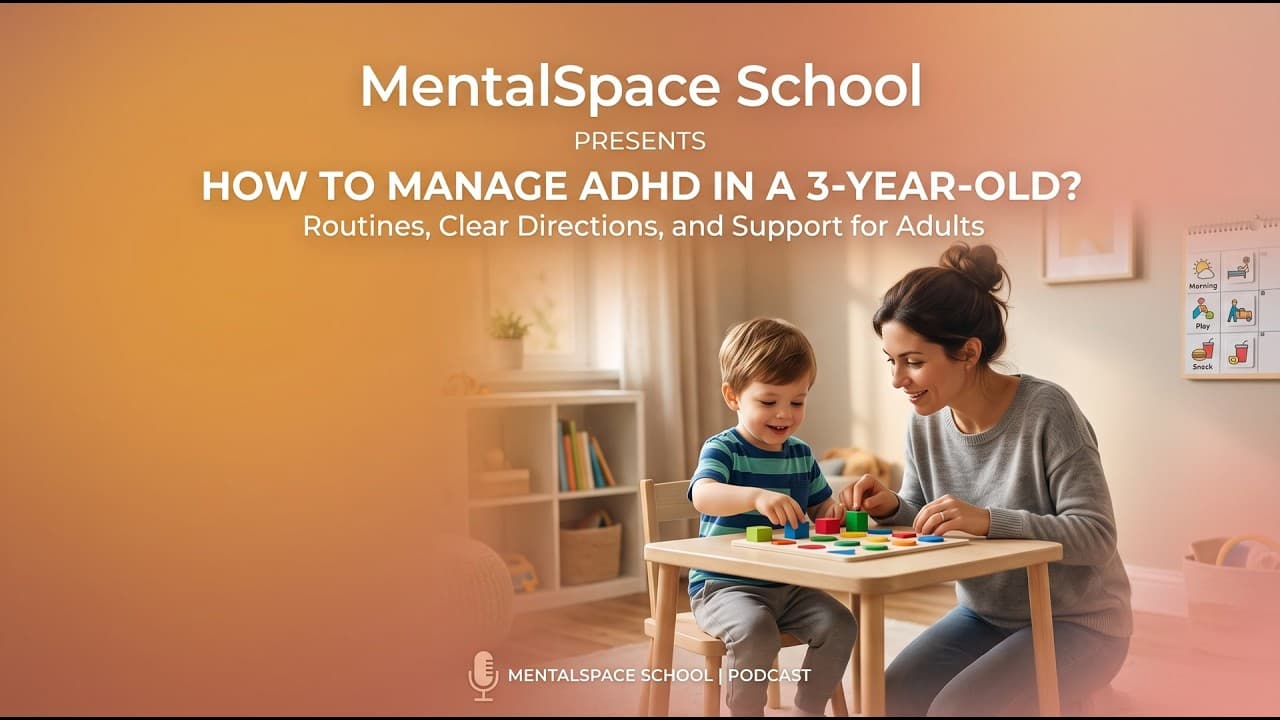
How to manage ADHD in a 3 year old? — Full Episode
How to manage ADHD in a 3 year old?
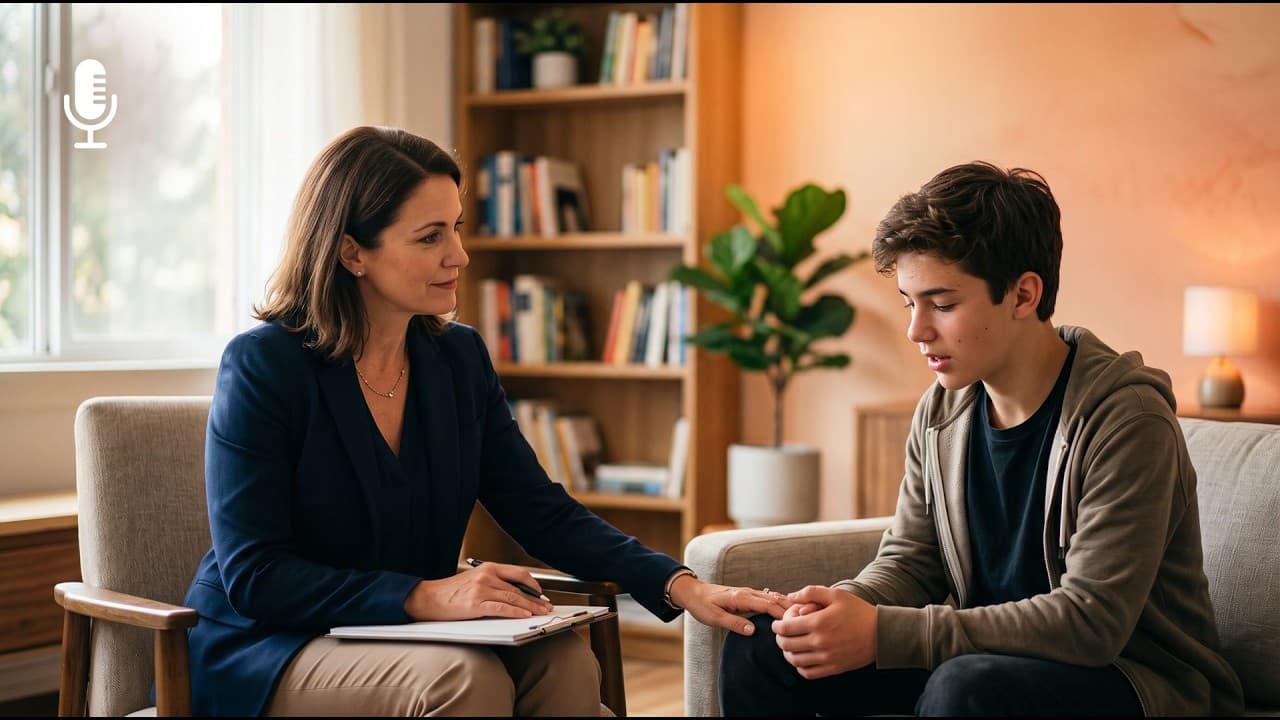
How to help a teen with severe depression? — Full Episode
How to help a teen with severe depression?
When a Teen Becomes the Parent: Sibling Care and School
Educators and parents: some of the most responsible kids in your building are also the most tired.
Need this kind of support in your school?
MentalSpace School delivers teletherapy, onsite clinicians, live workshops, and HB-268 compliance support to K-12 districts nationwide. Book a 15-minute call to see what fits.
Get started