
10:40 AM: What Happens After a Student Discloses
In this episode
A crisis plan you have never rehearsed is not a plan. It is a document.
Here is the honest test for any school building. A student discloses something serious to a teacher at 10:40 on a Tuesday. Can every adult in your building name, without looking it up, who they contact, who stays with the stude
Generated from MentalSpace School: Georgia K-12 Mental Health and Compliance Guide
Transcript
You probably assume that if a crisis happens in a school, uh, say a student is having a severe mental health emergency, there's this seamless safety net just ready and waiting to catch them. Right. You kind of imagine a system like a like a hospital triage desk. Exactly. Everyone wearing a badge, knowing exactly which door to walk through, who to page, and how to get that child immediate help. Yeah. A highly orchestrated response. But what if the very tool designed to provide that help, you know, the school's official crisis plan is actually just an illusion of safety? It really forces us to ask an uncomfortable question. We put so much faith in the idea that uh
just because a policy exists on paper, it automatically translates into a functional reality even in a totally chaotic environment, right? And schools are incredibly chaotic environments. Today we are going on a deep dive into the anatomy of a student crisis. In that crucial first hour, we're looking at source materials from Mental Space School. Yeah. They detail K through2 mental health support pathways, protocols, and services, specifically focusing on Georgia's educational landscape. Our mission today is to look at the claims they make about what a functioning lifeline actually looks like versus one that, well, just looks really good in a filing cabinet. And that's a really vital distinction to make. Okay, let's unpack this because we are
moving away from abstract educational policy today. We're zooming right down to ground level. I love that approach. I mean, imagine standing in a crowded school hallway on a random Tuesday morning. That ground level perspective is really where the true test happens. I mean, theoretical plans are easy to write in a quiet boardroom, right? You have unlimited time. Oh, absolutely. But emergencies don't happen in boardrooms. They happen in the middle of third period math when a teacher is, you know, managing 30 other kids, right? Before we even get to the solutions proposed in these sources, we need to look at what the materials identify as the fatal flaw in how schools currently handle emergencies. The fatal
flaw. Yes, it's pretty glaring once you see it. The documentation presents a scenario that is chillingly specific. Let's say it is exactly 10:40 a.m. on a Tuesday. Okay, 10.4 4 a.m. A student walks up to a teacher and discloses something serious. Maybe they are experiencing severe suicidal ideiation or they mention something about self harm. It is the scenario educators honestly fear most and according to the documentation it's the ultimate test of an institution's preparedness. The sources propose a strict metric for school leadership here. Can every single adult in that building name without looking it up or asking a colleague who they contact immediately and who physically stays with the student, right? And exactly how long
it takes to reach a licensed clinician. The failure condition outlined here is incredibly stark. If the answer to any of those questions involves someone saying, "Ah, hold on. Let me go look for the crisis binder." Then it's over. Exactly. Then the school does not actually have a plan. They just have a document. The binder test. I look at it like the safety card in the seat pocket of an airplane. Oh, that's a great analogy, right? You do not want the flight attendant to be reading the manual for the very first time while the cabin is actively losing pressure. Definitely not. It has to be pure muscle memory. If a teacher is flipping through a three-
ring binder while a kid is in a full-blown psychiatric crisis, the system has already failed. It absolutely has. But I have to ask, why is there such a massive persistent disconnect in these institutions? Like why do smart administrators assume a written document equals a rehearsed sequence? What's fascinating here is the psychology of administrative complacency. Okay, tell me more about that. Well, when an institution spends months drafting a comprehensive policy, getting it approved by a legal team, printing it out, and putting it in a bright red binder on a shelf, the brain tricks them. Yes. The human brain chemically registers that as a completed task. The problem is solved in their minds. The document itself creates
a powerful but entirely false sense of security. So they get the dopamine hit of finishing the paperwork, but they haven't actually change human behavior. Precisely. The source material argues that crisis prevention is not a poster on a wall or, you know, a binder on a shelf. It is a rehearsed sequence. It is a known phone number. It is a clinician who can physically pick up the phone today. Because a plan you've never reversed is just a theoretical wish list. Exactly. So, if relying on a binder fails the second the clock hits 10.41 a.m., we need to trace exactly what the sources claim should happen in a well-built clinical pathway. We need to see the ideal
response. Let's walk through the anatomy of that critical first hour step by step. The sources actually provide a really detailed composite example of a functioning protocol for this. So, it's 10:40 a.m. The student makes a serious disclosure to the teacher. According to this protocol, the teacher stays with the student, right? But the key directive here is that they do not investigate the claim. Mhm. And they never promise to keep a secret that they aren't legally allowed to keep. That boundary is critical for a few reasons. Here's where it gets really interesting. Because we normally ask teachers to be everything. Mentors, protectors, detectives, amateur therapists. We put a massive burden on them. Yeah. But this pathway
explicitly tells them not to investigate. Just stay with the student. I can see how that takes the pressure off. But why is there a strict rule against asking the student more questions to figure out what's going on? Well, when a teacher investigates uh asking leading questions like, "Are you sure?" or "Did this happen at home?" or "How long have you felt this way?" They're just trying to help, though. They are, but they are unintentionally entering a clinical and investigative realm they simply aren't trained for. Oh, I see. If there is abuse involved, amateur questioning can actually muddle potential forensic evidence. Wow. Alternatively, the wrong question might inadvertently escalate a student's psychiatric crisis. So, by trying
to help, they might accidentally contaminate a future investigation or trigger a worse panic attack. Exactly. What about the secreteping part? Cuz sometimes a kid will only open up if they get a promise of confidentiality. Promising to keep a secret is a massive liability. Teachers are mandated reporters by law. All right. They have to report it. Yeah. So, if a teacher promises a child, I won't tell anyone and then is legally compelled to report a suicide risk to the administration or the state, the trust is entirely shattered. The student just learns that adults lie to them. Exactly. By removing the burden of clinical judgment, the protocol maintains the teacher student relationship as one of pure support
rather than, you know, an interrogation. The teacher just holds the space. Okay. So, what happens at 10.45 a.m.? The handoff, right? The documentation states that within minutes, the counselor takes over. The student is never left alone. But wait, we just established that a school counselor shouldn't do a severe psychiatric risk assessment entirely alone either. They really shouldn't. No. And we know schools don't have the budget to keep a licensed clinical psychiatrist sitting in the hallway just in case. Definitely not. So, how is a same day assessment physically possible without putting the kid in an empty room to wait or putting them on hold with a generic hotline? That logistical bottleneck is exactly what breaks most
current systems. I can imagine. The protocol claims the handoff happens immediately because every minute sitting in that hallway or waiting in a quiet room is giving the students anxiety time to snowball. So the sources mentioned that the counselor reaches the assigned clinical team directly. A licensed clinician conducts a risk assessment and safety planning on that very same day. Same day is huge. Caregivers are contacted and a plan is mapped out for that afternoon, the ride home, and the very next morning. Notice what they highlight as absent from this sequence. Right? A school counselor doing a clinical risk assessment alone is explicitly avoided. and nobody is waiting around for a call back from an intake line.
But uh I'm trying to visualize this. How does this handoff to a clinical team actually happen in the building? Does the kid just get handed a telephone? Based on the teleotherapy model outlined in the materials, the school counselor would transition the student to a secure private space equipped for teleahalth like a designated computer or tablet. Exactly. Then the counselor initiates the connection with their dedicated external clinical team. Okay. So it's not a cold call. No. So instead of a phone call to a dispatch center, it is a direct secure video link to a licensed professional who is already contracted and you know familiar with the school. Got it. The counselor stays nearby to provide physical
safety while the clinician takes over the heavy lifting of the psychiatric assessment. That transition from a generic intake hotline to a dedicated embedded system is a major claim in the mental space school materials. It is the core of their model. They state they provide same day teleaotherapy with 247 support behind it, assigning dedicated therapist teams per school. Dedicated teams make a world of difference. It reminds me of having an embedded IT team at a company rather than just dialing a random 1800 call center when your server crashes. That's a perfect way to look at it, right? If the IT person knows your specific network architecture, they don't have to spend an hour asking basic questions.
How does a dedicated team fundamentally alter the dynamic of mental health crisis intervention compared to say a standard state hotline? Think about the triage desk analogy you used earlier. When you call a generic state hotline, you spend the first 20 minutes just establishing context. Who are you? Where are you exactly? What school is this? What is the demographic of the building? When a therapist team is dedicated to a specific school, they already know the ecosystem. They know the administration's protocols, right? They might even know the students peer group or historical context from previous interventions. The sources also emphasize that these teams are staffed with licensed, diverse, and culturally competent therapists. Now, cultural competence gets thrown
around a lot in corporate literature. It really does. What does it actually mean for a teenager having a breakdown at 10:45 in the morning? Practically speaking, cultural competence means a student doesn't have to pause their own crisis to explain their culture, their neighborhood dynamics, or their family's expectations to a stranger on a screen. Oh, wow. That makes so much sense. Yeah. If a student mentions a specific cultural pressure from home that is driving their anxiety, a culturally competent therapist instantly understands the gravity and context of that statement. They don't have to educate the therapist. Exactly. The intervention is synthesized with the school's specific environment, removing a massive barrier to communication. The documentation outlines that they
also cover suicide and violence prevention, staff wellness, and family counseling. But let's look at the practical implementation here, the logistics, right? The most advanced clinical model is completely useless if families can't afford it. If there is a massive payw wall keeping the most vulnerable kids out, then this isn't a safety net. It's a luxury service. Accessibility is usually the filter that separates a theoretical model from a functional one. Well, the materials claim the financial access point for Medicaid patients is exactly $0. That's significant. They also list acceptance of major insuranceances including Blue Cross, Blue Shield, Sigma, Etna, United Healthcare, Humanana, Peach State, Care Source, and Group. That's a very comprehensive list. And they note the
system is fully compliant with HIPPA for medical privacy and furpa which protects student educational records. Covering that specific range of insuranceances alongside Z Medicaid encompasses an enormous portion of the student population in Georgia. It removes the barrier completely. Removing the financial friction point is the only way to achieve that same day timeline. Right. Because if a parent has to leave work Exactly. or figure out how to pay a massive outof network co-pay or wait for an insurance approval. That same day safety plan instantly turns into a 3 weeks from now plan. So what does this all mean for school administrators right now? Well, look at the calendar. Today is August 29, 2026. The clock is
ticking. The sources explicitly mention that mental space provides support for Georgia's HB268 compliance. For those outside of Georgia, HB268 is the state mandate requiring schools to have established structural mental health protocols in place. It's a legal requirement now and the deadline for that compliance was July 2026, which was last month. School districts all over the state are legally required to have these supports functioning right now. If we connect this to the bigger picture, that legislative deadline is likely creating immense pressure. And superintendents are looking at those red binders on their shelves and realizing those documents do not meet the functional legal requirements of the state mandate. They need a system that actually deploys, not just
one that exists on paper. The state mandate is one type of pressure for sure, but the sources present outcome data that I well I find a little difficult to accept at face value. Oh, really? Which part? They site an 85% family satisfaction rate, which makes sense if the service is free and immediate. But then they site a 92% reduction in anxiety and an 89% improved attendance rate. Those are big numbers. Massive. I get the theory of treating anxiety, but 89% improvement in attendance sounds astronomically high for a taotherapy intervention. Are they claiming that hopping on a video call cures truency? like what is actually happening in that session that gets a chronically absent kid out
of the car the very next day? It's a fair question. To understand those numbers, we have to reframe how we view chronic absenteeism. Okay. How so? For a massive percentage of these students, they aren't skipping class in the traditional defiant sense. They are experiencing severe school refusal driven by unmanaged anxiety. School refusal. I've heard the term. How is that different from just, you know, a kid not wanting to go to school? School refusal is a clinical issue. The anxiety manifests physically. We're talking about severe stomach aches, panic attacks, vomiting, or a sheer paralyzing inability to get out of the car in the drop off line. Oh, wow. Mornings become a traumatic battleground for the entire
family. I still don't see how a single video call fixes a paralyzing physical panic attack, though. Well, it isn't just one call. It's the initiation of a comprehensive plan. When the therapist conducts that same day assessment, they aren't just talking. What are they doing then? They are actively deescalating the physical symptoms of panic. They establish an immediate safety plan for the ride home. More importantly, they provide family counseling to help the parents manage the next morning's routine. Ah, so the parents are involved immediately. Exactly. They give the student concrete coping mechanisms, grounding exercises, breathing techniques that they can use the moment they pull into the school parking lot. They give them tools. By treating the
root cause, the medical emergency of anxiety. You remove the barrier to the classroom. You aren't just telling a kid to go to class. You are giving them the tools to physically survive the morning drop off. That makes the mechanics of it much clearer. It shifts the entire perspective from an administrative problem like this kid is being defiant to a medical problem being actively managed. Exactly. But let's bring it back to that school leader sitting in their office sweating about their own crisis binder. The one staring at them from the shelf, right? How do they actually figure out if their current system is broken before a real crisis exposes it? The source material suggests a stark
low stakes test to find out a test. It is a recommended immediate next step for a school leadership team designed to be executed before their very next staff meeting. The five-minute tabletop exercise. The sources say you sit your team down and you say the 10:40 a.m. Tuesday scenario out loud. A kid makes a severe disclosure. Then you point to three random staff members and ask them exactly what they would do at 10:41 a.m. We should actually run this right now to see how quickly it can fall apart. Oh, I'm in. You be the principal running the drill. I'll be the math teacher. Let's do it. Okay. It's 10:41 a.m. A student just told you they
want to hurt themselves. Go. What's your first move? Uh, well, I'd probably use the classroom phone to call the front desk to get the counselor. The front desk secretary is on her lunch break. It rings to voicemail. Oh. Uh, okay. I would send another student down the hall with a note to the counselor's office. The counselor is in illegally mandated 504 meeting with parents and cannot be interrupted. The kid in front of you is now actively crying and the rest of the class is watching. Now what? I I guess I'd have to look in the emergency binder. And there it is. The system just completely broke down in 15 seconds. Exactly. That is the power
of forcing a theoretical document into practical realtime human behavior is beautifully simple but terrifying. When you ask someone what their muscle memory is and they hesitate or rely on ideal conditions, like the secretary always being at her desk, you instantly locate the point of failure because conditions are never ideal. Never. The golden rule of this exercise is that whatever gaps you find during that 5minute tabletop drill are the exact gaps you will experience in a real crisis at 10.41. It perfectly encapsulates the core theme we extracted from these materials. A plan is only a plan if it's a rehearsed sequence. If you want to look more into this specific documentation or the model itself, the
contact access listed for mental spacechool is mentalchool.com or they can be reached at mental spacechool@shik theapy.com. It's definitely worth looking into for anyone in school administration. We've covered a lot of ground today. We started by looking at the dangerous illusion of the crisis binder. We walked through the physical and chronological anatomy of a well-built first hour response. Why teachers shouldn't investigate, right? and how the handoff to taotherapy physically happens in the building and why counselors need immediate clinical backup. We explored the claims that dedicated 0 Medicaid systems turn legal compliance for mandates like Georgia's HB268 into actionable care. It highlights the vast difference between passing a state audit and possessing a functional system that can
catch a student in freef fall. I'll leave you with one final thought to ponder, something that builds on everything we've just discussed. The source materials focus heavily on how this rapid rehearsed response saves the individual student who is actively in crisis which is the primary goal of course right but think about the ripple effect on the other 25 students sitting in that Tuesday morning classroom the environmental impact of a crisis yes if a teacher doesn't have a rehearse sequence if they have to play detective if they start visibly panicking or if they escalate the tension trying to figure out what to do the entire classroom absorbs that trauma They watch the adult in the room
lose control. Exactly. But if a teacher is empowered by a structural system to seamlessly hand off a crisis calmly, smoothly, without panic, how much does a well rehearsed mental health plan actually function as a crucial tool for preserving the psychological safety and the educational environment for every single other child in that room. A functioning protocol doesn't just protect the individual, you know, it protects the psychological ecosystem of the entire building. The illusion of safety might comfort the adults in the boardroom, but the rehearsed sequence is what protects the kids in the classroom. Well said. Thank you so much for joining us on this deep dive. Keep looking at the protocols operating in your own communities,
run those tabletop exercises, and never stop asking the tough questions about the systems designed to protect us. Because remember, if you have to look for the binder, you don't have a plan. Take care, everyone.
More episodes

Diabetes, Asthma, Epilepsy and Worry: Helping Anxious Students
A student with epilepsy can be fully prepared to manage a seizure and still spend every class worrying about having one in front of classmates.
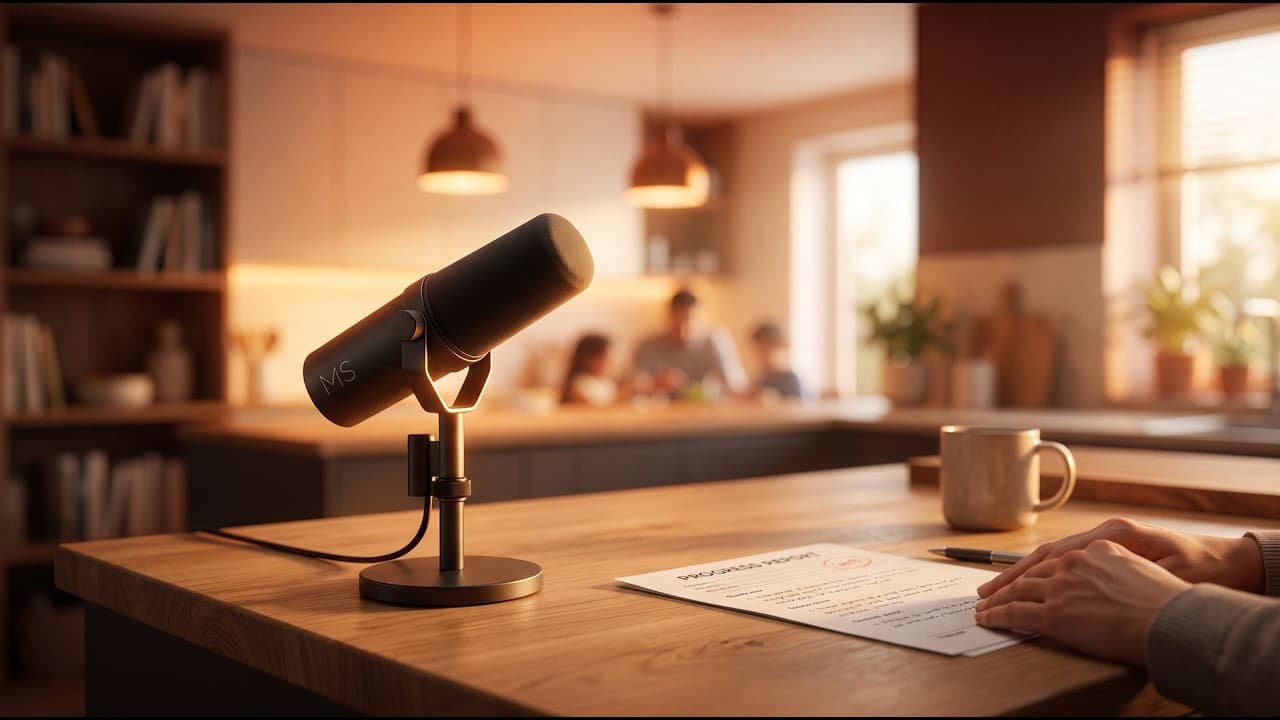
When the First Progress Report Hits: Grade Anxiety at Home and School
Progress reports went home this week. If things got tense at the kitchen table, you're not alone.
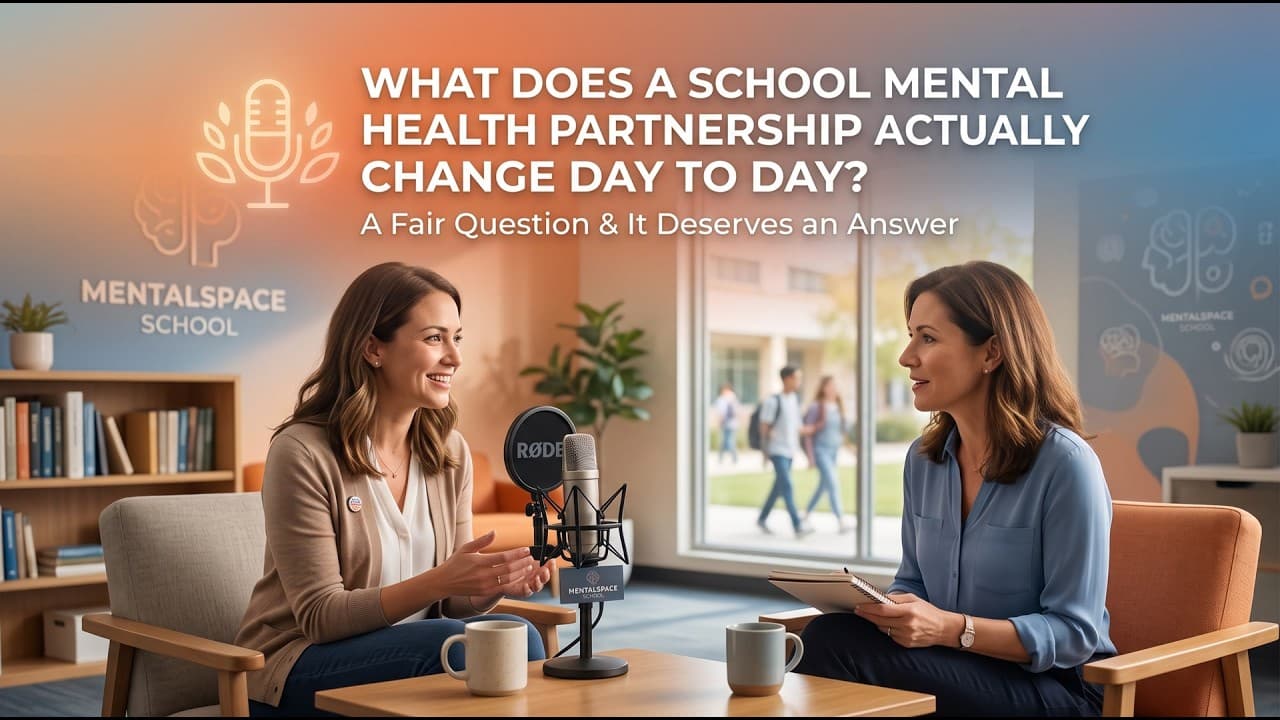
What Changes When a Therapist Team Knows Your Building
What does a school mental health partnership actually change day to day? Fair question, and it deserves a concrete answer rather than a brochure.
Need this kind of support in your school?
MentalSpace School delivers teletherapy, onsite clinicians, live workshops, and HB-268 compliance support to K-12 districts nationwide. Book a 15-minute call to see what fits.
Get started